
Last updated November 2, 2026
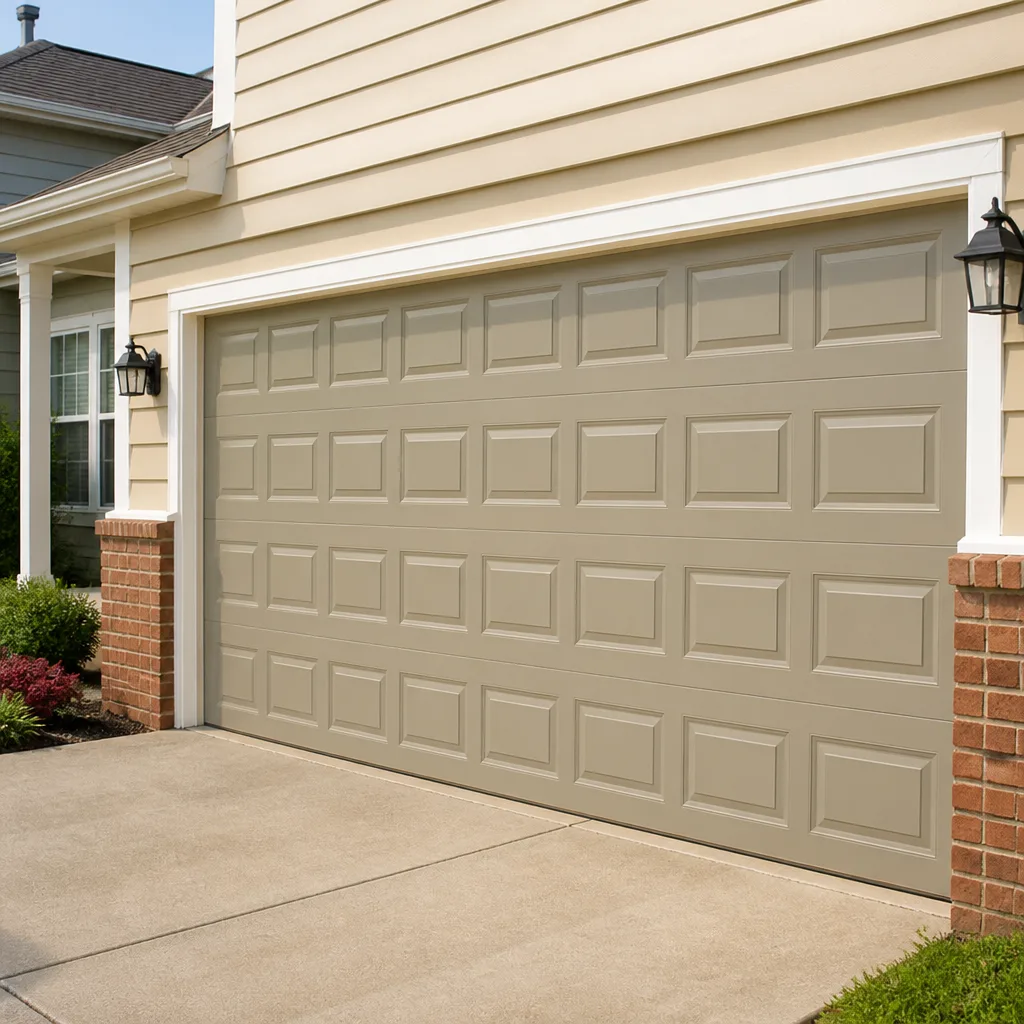 Raised-panel steel
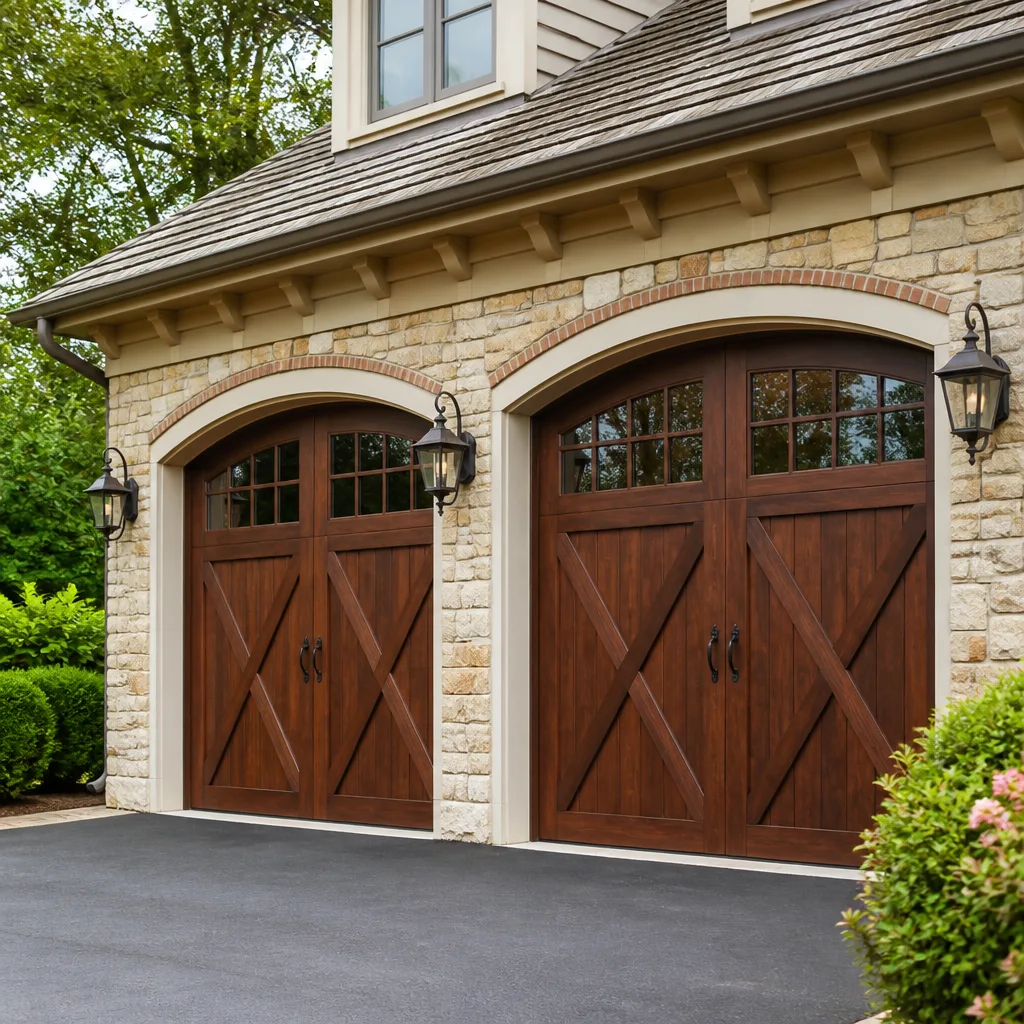 Carriage house
 Modern flush
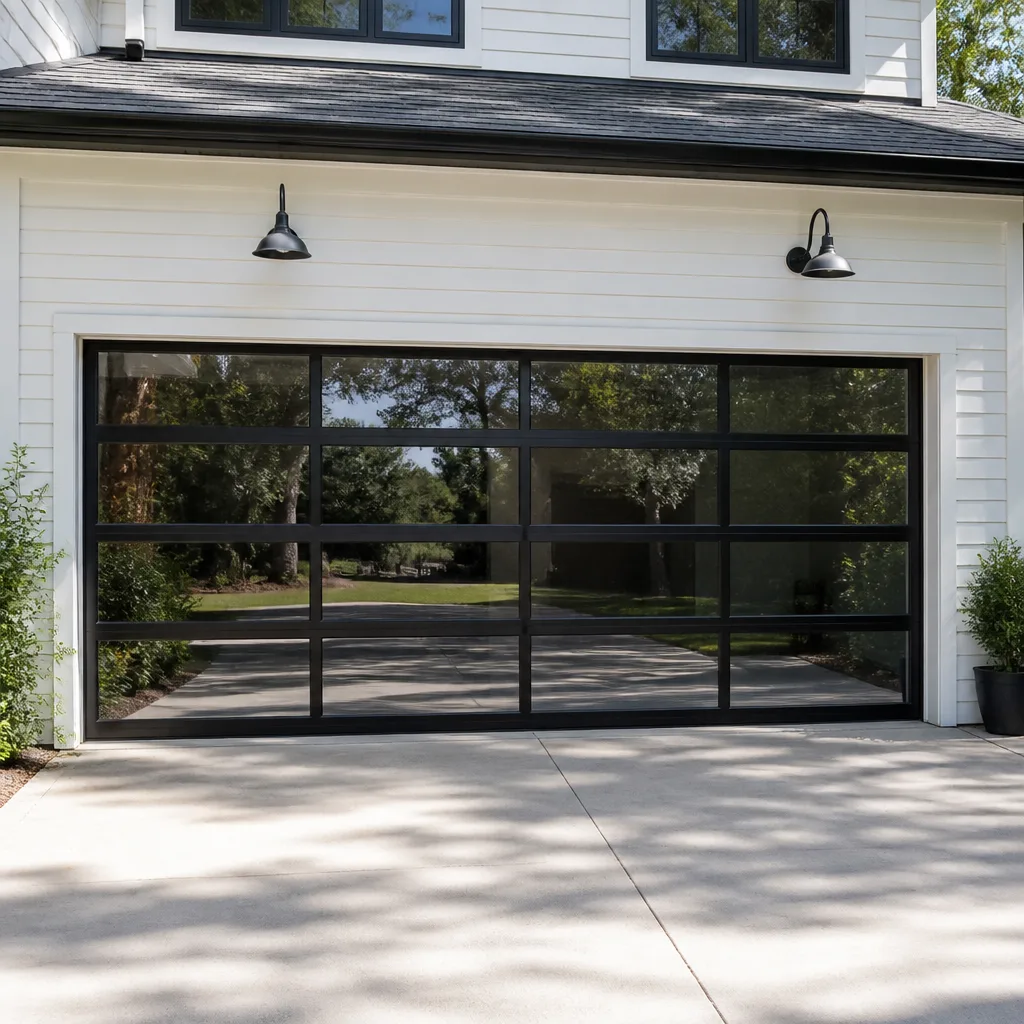 Full-view glass
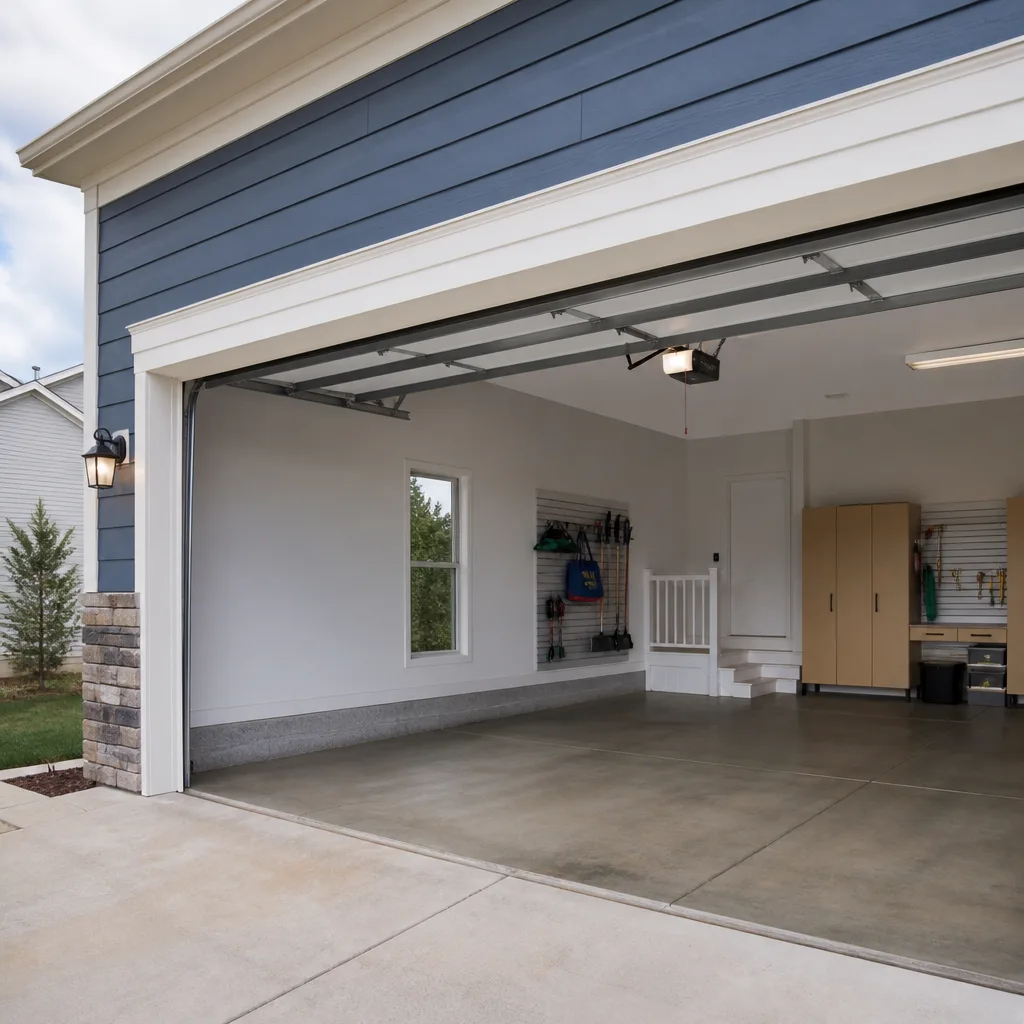 LiftMaster openers
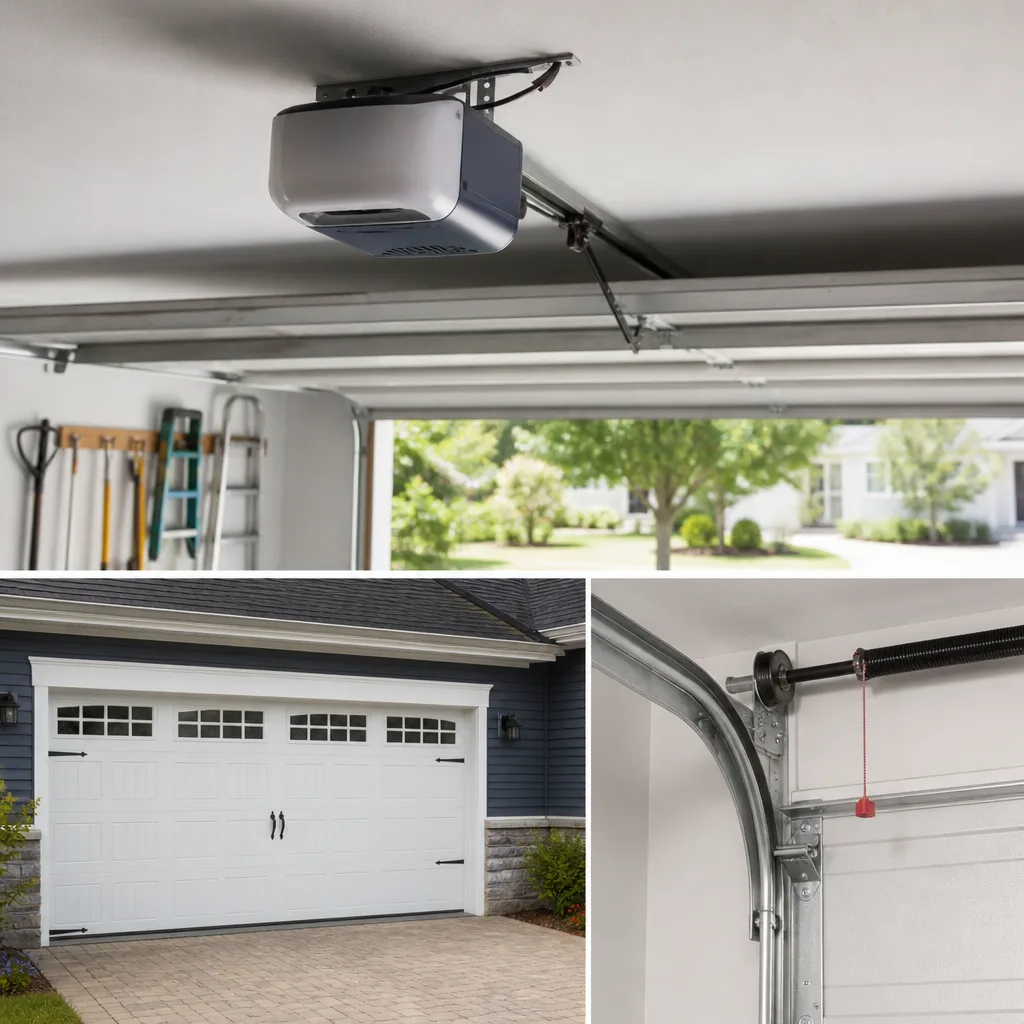 Chamberlain openers
Full 25-point door and opener safety check with every visit - springs, cables, rollers, tracks, and your LiftMaster or Chamberlain opener included
You get a price before we start. It does not change when the truck arrives.
Get your free estimateDIY vs Professional Garage Door: The Fountain Valley Homeowner’s Decision Guide
Every year, roughly 20,000 Americans land in emergency rooms with garage door injuries, and torsion springs are the leading culprit. A wound torsion spring stores enough kinetic energy to shatter bone or sever a tendon when it lets go, and it doesn’t care whether you were trying to save $200 on a service call. If you own a home in Fountain Valley, your garage door cycles open and closed hundreds of times a year, quietly wearing through springs, cables, rollers, and opener gears. The honest truth is that some of that maintenance belongs in your hands, and some of it absolutely does not. This guide draws that line precisely, task by task, so you know when to grab a wrench and when to pick up the phone, and you can find more guides & resources on our blog.
Styles & brands we work with
- Raised-panel steel
- Carriage house
- Modern flush
- Full-view glass
- LiftMaster openers
- Chamberlain openers
Quick Answer
The DIY vs. professional decision is not a single choice, it’s a task-by-task call: lubrication, sensor realignment, remote programming, and weather seal replacement are safe homeowner jobs with basic tools. Torsion spring replacement, cable work, and opener gear swaps belong with a trained professional because the stored mechanical energy in these components can cause serious injury or death. In Fountain Valley, the cost difference between a confident DIY fix and a professional repair is smaller than most people expect once you factor in tools, downtime, and the cost of correcting a mistake – see our Garage Door Cost Breakdown: The Fountain Valley Homeowner’s Reference for 2026 for full numbers.
Table of Contents
- The Safe DIY Task List: What a Fountain Valley Homeowner Can Confidently Handle
- The Professional-Only List: Specific Physical Reasons Each Job Is Dangerous
- The Tool and Skill Threshold Test: Are You Actually Prepared?
- The Honest Cost Comparison: DIY Savings vs. Mistake Correction Fees
- Brand-Specific DIY Considerations: Which Openers Help You and Which Lock You Out
- Fountain Valley-Specific Factors: Climate, Salt Air, and Code Requirements
- Common Mistakes to Avoid
- When to Call a Professional
The Safe DIY Task List: What a Fountain Valley Homeowner Can Confidently Handle
We’ve walked hundreds of Fountain Valley homeowners through their garage door systems, and there’s a clear set of tasks that sit firmly on the DIY side of the line. These jobs require no spring tension, no cable manipulation, and no risk of a door falling on you. They also happen to be the tasks most often quoted at a premium by less scrupulous service providers, which makes knowing how to do them yourself genuinely valuable.
A garage door is your home’s largest moving part, and like any moving part, it needs lubrication to keep operating smoothly. This is the single most underrated DIY task in the book. Buy a can of white lithium grease or a garage door specific silicone spray, not WD-40, which is a solvent and displacer, not a lubricant. Apply it to the rollers, hinges, and the torsion spring itself once a year. In Fountain Valley, where coastal air accelerates corrosion on exposed metal, twice a year is better. You’ll hear the difference immediately: a properly lubricated door is notably quieter and smoother through its travel.
The bottom weather seal is another straightforward replacement. This is the rubber strip along the bottom edge of the door that keeps water, dust, and pests out. On older doors, it cracks and hardens in the Southern California sun within three to five years. The replacement process is simple: pull the old seal out of its retainer track, cut the new seal to width with a utility knife, and slide it in. No springs, no cables, no risk. A new seal costs between $25 and $45 at any hardware store in Orange County, and the job takes 30 minutes. This is a task where calling a professional costs more in labor than the part itself is worth.
Remote programming is another homeowner-appropriate task, and it’s one of the most commonly misdiagnosed issues we see. When a remote stops working, the door opener is rarely broken. More often, the remote has simply lost its sync, a battery is dead, or the opener’s memory needs to be cleared and re-learned. Most modern openers from Genie, LiftMaster, and Chamberlain have a learn button on the motor housing that makes reprogramming a two-minute job. The vast majority of remotes also have a clearly marked programming sequence printed right on the back. Before you call anyone, try pressing and holding the learn button on the opener for six seconds to clear the memory, then follow the remote’s instructions to re-sync.
Sensor realignment rounds out the safe DIY list. The photo eye sensors mounted near the floor on each side of the door have a small LED indicator light. When the door reverses immediately after touching the floor, or refuses to close entirely, misalignment is the most common culprit. The fix is simply a matter of loosening the wing nut on the sensor bracket, adjusting the sensor so the lights on both units are solid and steady, and re-tightening. No tools beyond a screwdriver or small wrench are required, and you’ll know instantly if you’ve fixed it because the door will close normally again. In Fountain Valley homes with older concrete driveways, shifting slabs can knock sensors out of alignment more frequently than you’d expect.
These four tasks, lubrication, seal replacement, remote programming, and sensor alignment, account for the largest share of avoidable service calls we see. If you’re comfortable holding a screwdriver and reading a five-step instruction list, you can handle all four without risk. The savings are real, and the satisfaction of knowing your own system is part of responsible homeownership.
The Professional-Only List: Specific Physical Reasons Each Job Is Dangerous
On the other side of the line are the tasks that no homeowner should attempt without professional training, and the reasons are physical, specific, and non-negotiable. We’re not protecting a trade here, we’re repeating what emergency room data from Orange County demonstrates every year.
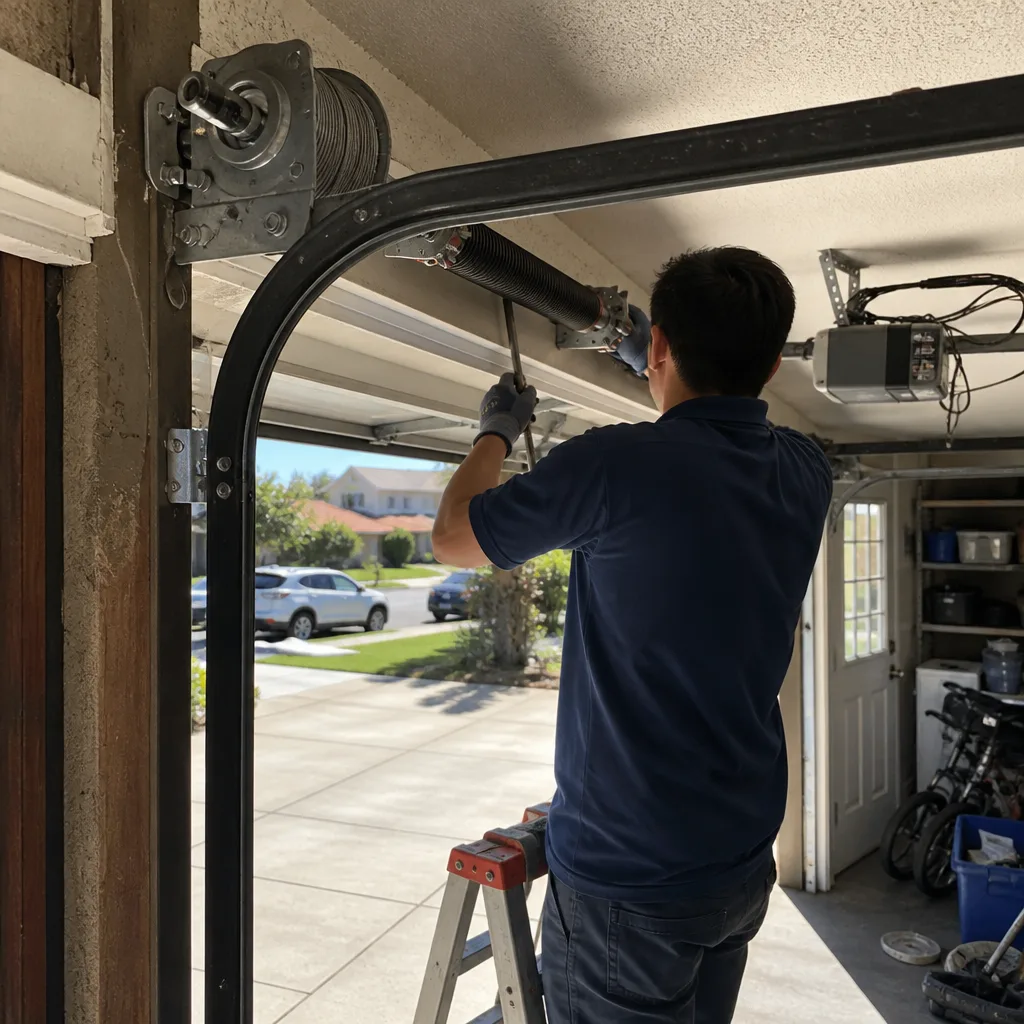
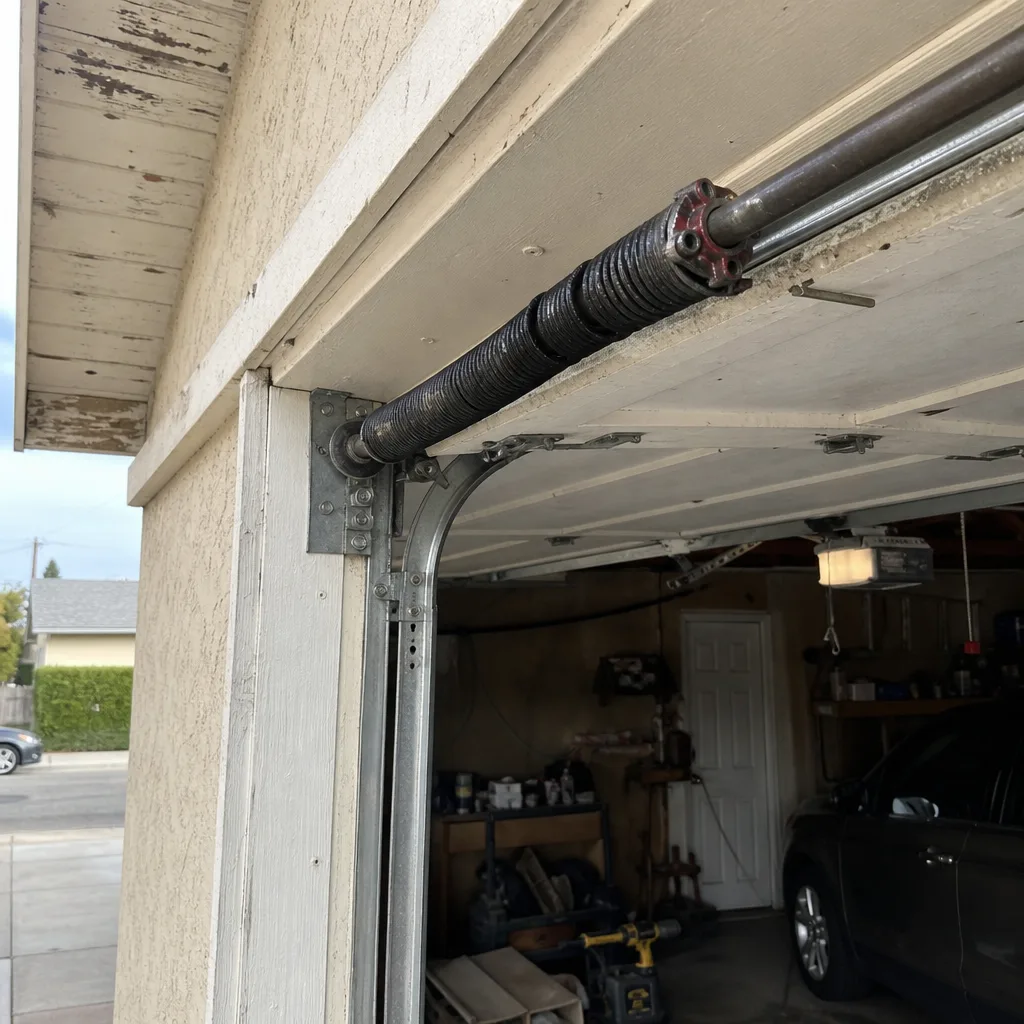
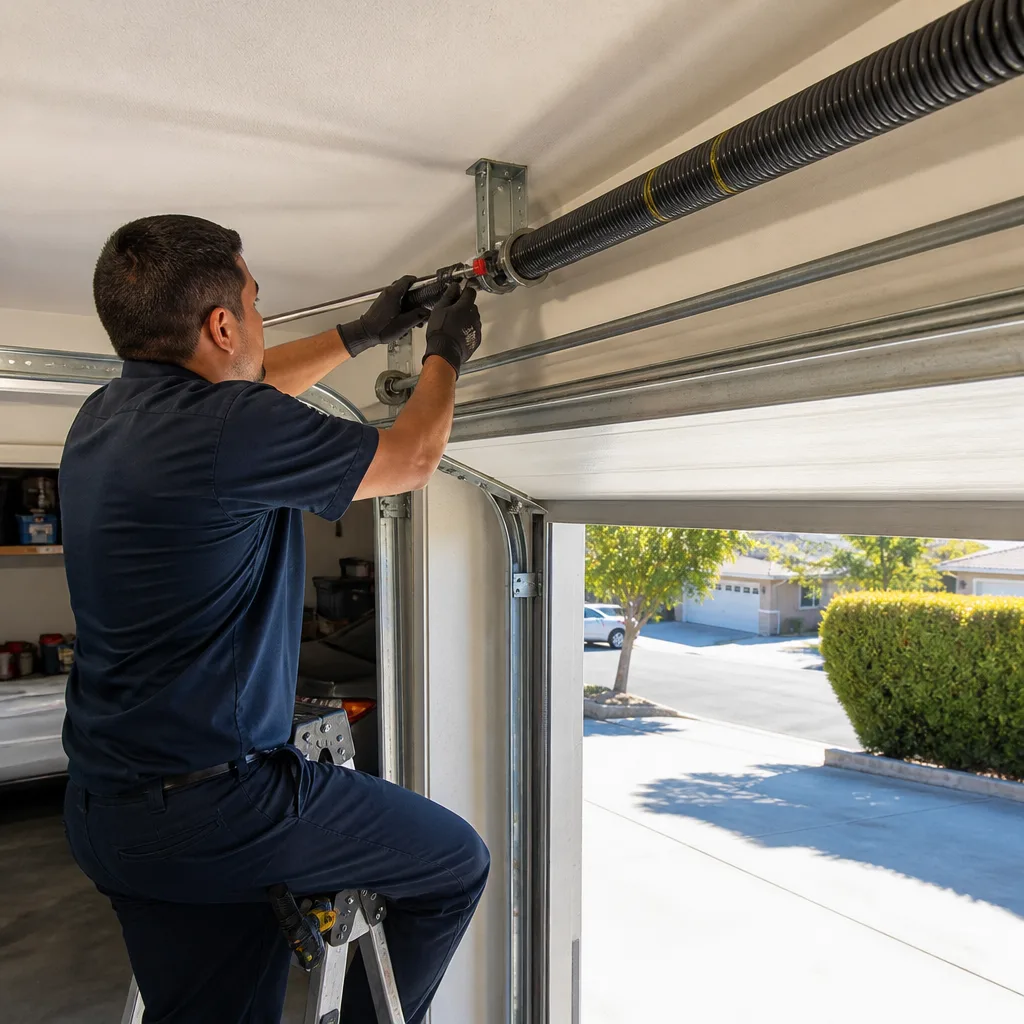
Torsion spring replacement. The torsion spring is the long, tightly wound coil mounted horizontally above the door. It stores the energy needed to lift a 150-to-400-pound door, and that energy is constantly under tension, even when the door is closed. When a torsion spring snaps, which happens after roughly 10,000 cycles, or about 7 to 12 years of normal use in a Fountain Valley household, it releases that stored energy in a single violent motion. Our own technicians have seen the aftermath of failed DIY attempts: busted knuckles, broken wrists, facial lacerations from uncontrolled winding bars, and in the worst cases, permanent disability. The average homeowner does not own the proper winding bars, which are not the same as regular rods and pipes, and does not understand the fractional-turn precision required to set the correct torque. This is the number one cause of garage door injuries, and it is not a gray area. Do not attempt it.
Cable replacement. The lift cables run along each side of the door and connect to the bottom brackets, routing through the cable drums at the top. They work in concert with the springs, and on a torsion spring system, the cables are under significant tension at all times. A cable that is frayed or broken is a warning sign, not a project. Replacing a cable requires de-tensioning the spring first, which is the dangerous part. Homeowners who skip the de-tensioning and try to remove a cable under load can release hundreds of pounds of counter-balance force, sending the door crashing down or whipping the cable like a saw blade. The tools alone, proper cable routing tools and tension-setting knowledge, are beyond what most garages contain. This is a job for a trained professional.
Opener gear and sprocket replacement. The gear inside the opener motor housing is the part that typically fails on chain-drive openers, producing a grinding sound and eventual loss of drive. On paper, it looks like a simple gear swap. In practice, it requires opening the motor housing, dealing with a main drive gear that is press-fit onto the shaft, and re-seating the internal limit switch assembly. We’ve seen well-meaning homeowners strip the replacement gear, misalign the limit switches, and create a door that over-travels and damages the top panel. The brand-specific programming, particularly on LiftMaster and Genie openers, also requires a reset sequence that is not documented in any owner’s manual. This is one of the most frequently misdiagnosed failure points in garage systems, and opening a motor housing without the right sprocket tool creates more problems than it solves.
Sectional panel replacement. A damaged bottom panel or a cracked top section can seem like a simpler replacement than a full door, but panels from different production runs rarely match perfectly, and older doors may have panels that are no longer available at all. More importantly, removing a bottom panel on a door with working springs means re-cabling the bottom brackets, which returns you to the cable tension problem. If a pickup truck backed into your door and bent the bottom section, the damage is likely worse than it looks anyway: track misalignment, cracked weather stripping, and compromised balance. This is an assessment call, not a parts swap.
Conversion from extension to torsion springs. Older Fountain Valley homes, particularly those built before 1990, often still have extension springs, the long, exposed springs that run parallel to the tracks on either side. Converting to a torsion system is a meaningful safety upgrade, because torsion springs fail less catastrophically when they contain a safety cable. But the conversion requires re-engineering the header, adding a torsion tube, and setting custom torque for the door’s exact weight and height. It is not a retrofit you do with a parts kit and a weekend. We do these conversions regularly for homeowners who have lived through an extension spring snap and want the safety margin of a modern system.
The consistent, non-negotiable truth is that these tasks all share one thing: stored mechanical energy. The second you are working against spring tension or load-bearing cables, the margin for error drops to zero. Because we value your safety over your business, we would rather see you complete the safe DIY list with confidence than attempt the professional list and get hurt.
The Tool and Skill Threshold Test: Are You Actually Prepared?
Before you take on any garage door job, even the safe ones, run yourself through this honest self-assessment. It will save you an afternoon of frustration and, in the case of the gray area tasks, potentially an injury.
- Do you own the actual tools, not just a screwdriver? Safe DIY tasks like lubrication and remote programming require basics: a can of proper lubricant, a utility knife, a tape measure, and possibly a small wrench set. If you don’t already own these basics, a single service call may cost less than the tool purchase and your time. Be realistic about what’s in the drawer.
- Can you identify which spring system you have? Look at the hardware above your door. Coils mounted horizontally on a bar over the door mean torsion springs, and they are the professional-only category. Long springs stretching parallel to the track on each side mean extension springs, which also fall in the professional-only category for any replacement or adjustment. Just knowing the difference is a basic literacy test for garage door work.
- Do you understand the release handle? The red cord hanging from the opener rail is the emergency release, and every safe DIY task should begin by pulling it and testing that you can open and close the door manually. If you’ve never done this, do it once during daylight with the door closed. If the door is too heavy to lift comfortably by hand, that’s a balance problem, and balance problems mean a professional adjustment, not a DIY solution.
- Can you follow a numbered sequence without skipping steps? Remote programming and sensor alignment are sequence-dependent, not strength-dependent. If you are the type of person who skims instructions and wings it, these tasks will frustrate you more than a pro will. And that’s okay. We’d rather have you make a clean call than a frustrating mess.
- Do you have a reliable helper for anything involving lifting or holding? Even a simple bottom seal replacement can be awkward solo if the door is heavy, and you should never crawl under a suspended door to access the track without first pulling the emergency release and verifying the door is secure in the fully open position.
If you answered honestly and still feel confident, the four safe tasks are yours. If any answer gives you pause, a quick call for a second opinion costs you nothing. Steward Garage Door Repair is a brand-agnostic specialist, which means we will tell you when a DIY fix is genuinely the right move and when it’s not. No upsell, no pressure. Our loyalty is to the homeowner’s long-term wellbeing, which is exactly what the name Steward is meant to signal.
The Honest Cost Comparison: DIY Savings vs. Mistake Correction Fees
Every DIY decision comes down to the same arithmetic: what you save in labor versus what you risk in mistakes, injuries, and time. Here’s the honest version for Fountain Valley homeowners, without the contractor math that makes DIY look foolish or the DIY culture math that makes professionals look unnecessary.
For safe tasks, the numbers are straightforward. Lubricating your door with a $12 can of white lithium grease saves a $129-to-$189 service call, and it’s a task you’ll repeat annually, so the savings add up over the life of the door. A bottom seal replacement with a $30 part saves a $150-to-$250 professional visit. Remote reprogramming costs nothing but five minutes of reading and saves a $100-to-$150 diagnostic fee. Sensor realignment costs the price of a screwdriver you already own and saves a $100-to-$175 call. In each case, the DIY path is not just cheaper, it’s genuinely appropriate.
The gray area is where the math gets interesting. Consider a torsion spring. A professional replacement in Fountain Valley typically runs between $250 and $450, including the spring, the labor, and the balance check that should accompany it. A homeowner who buys a $60 spring kit online and attempts the job themselves might save $200, but the risks are not hypothetical. We have been called out to homes where a DIY spring attempt left the door hanging off one side, the cable drum unspooled, and the original problem worse than when the project started. Correcting a botched spring job often costs $400 to $600, because the professional has to de-tension the improperly installed spring, correct the drum alignment, re-cable the door, and sometimes replace components that were damaged in the attempt. The $200 savings has become a $400 expense, plus the days the door was unusable.
The same is true for opener work. A homeowner who opens a motor housing to swap a $40 gear and strips the new gear in the process has not just lost the part cost, they’ve potentially damaged the drive shaft. A professional opener repair typically runs $175 to $350, and when we arrive after a DIY attempt, we’re often replacing more than we would have if the original failure had been handled correctly the first time.
The honest comparison also includes a hidden cost most DIY calculators ignore: downtime. Your garage door is both a security barrier and, for many Fountain Valley families, the primary entrance to the house. A door that’s half-dismantled on a Saturday afternoon becomes a security risk overnight, and a car trapped in the garage for three days while you wait for parts creates daily friction. Your garage door is your home’s largest moving part, and it is also the fastest route into your kitchen. Secure, working, every single day, is the baseline.
Our recommendation is not binary. We’d rather you save money on the tasks that are genuinely safe and in your wheelhouse. And we’d rather you call us before a gray-area attempt than after it’s gone wrong, because correcting a mistake is always more expensive than making the right call in the first place.
Brand-Specific DIY Considerations: Which Openers Help You and Which Lock You Out
One of the least discussed realities of garage door DIY is that not all opener brands treat the homeowner the same way. Some brands build their diagnostic tools into the wall console, making it easy for a homeowner to see what’s wrong. Others require a proprietary diagnostic tool that only dealers and brand-certified technicians carry, effectively locking the homeowner out of any meaningful self-diagnosis. Understanding your brand’s approach is essential before you invest time in a DIY diagnosis.
Genie openers are among the most owner-friendly on the market. Many Genie models have a diagnostic feedback system built into the wall console and motor unit: the long, short, or steady flashes of the status LED correspond to specific fault codes that are listed in the owner’s manual. If your Genie opener is flashing three times and the door reverses, the manual will tell you exactly what the sequence indicates, often a sensor obstruction or a force limit adjustment. Our experience in Fountain Valley is that Genie owners are more likely to successfully self-diagnose and even self-correct minor issues because the feedback loop is transparent and documented.
LiftMaster and Chamberlain openers, which share a parent company and many components, take a middle path. The newer models with a smart control panel and an LCD screen can display diagnostic messages in plain English, and the LiftMaster MyQ app can alert you to basic faults remotely. But deeper diagnostics, especially those involving the internal logic board or the travel limit module, are locked behind a dealer-level tool. Our technicians carry the equipment to read those fault codes, and for us, opener-specific diagnosis is a dedicated service rather than a sideline. That’s why we are equally fluent in the self-diagnostic features of every major brand we service, so we arrive already knowing how to communicate with your exact opener.
Raynor openers are less commonly seen in Fountain Valley homes, but they share hardware lineage with other major brands and are generally serviceable by a homeowner at the same level as LiftMaster. The remotes and keypads program through a learn-button sequence that is well documented, and the basic sensor alignment is identical across brands. The line between safe DIY and professional-only is the same for a Raynor as for any other, but the brand’s lower market share means parts are less likely to be on a hardware store shelf, which matters if you’re tackling a remote or keypad replacement.
The brand-agnostic advantage cuts both ways. We know your brand, whether it’s a Genie, a LiftMaster, or a less common opener, and we arrive with the diagnostic tools and the specific parts knowledge for your exact hardware. For homeowners, the takeaway is simple: use the brand’s documentation, check the LED codes, and when the code points to a component that lives inside the motor housing or the spring assembly, that’s the professional call.
Fountain Valley-Specific Factors: Climate, Salt Air, and Code Requirements
Fountain Valley sits just far enough from the coast that the salt air effect is moderate, but close enough to the Pacific that the marine layer rolls in most mornings, leaving a fine coat of moisture on exposed metal. For garage door components, that means one thing: corrosion moves faster here than it does in Riverside or Corona. Hinges, bottom brackets, and rollers show surface rust within five to seven years, and torsion springs develop micro-pitting that can shorten their cycle life. Homeowners in Fountain Valley should not assume that a spring rated for 10,000 cycles will hit that number in our climate, especially on doors that face west into the afternoon sun and the overnight damp. A 7,000-to-8,000-cycle lifespan is more realistic, which translates to replacement about every 7 to 9 years for an average household.
The Fountain Valley housing stock is also distinctive in ways that matter for this guide. Much of the city is made up of single-family detached homes built between the 1960s and the 1980s, with a heavy concentration of ranch-style and two-story floor plans. What you’ll find in these garages is a mix of original doors and retrofits: some homes still have the original wood-panel doors that are heavy and require more spring torque than modern steel doors. Others have been updated with Clopay or Amarr steel doors that are lighter and better insulated, which changes the balance calculations. If you live in a Fountain Valley home that still has a wood door, be aware that it weighs more than any modern replacement, and the springs and cables are working proportionally harder. Lubrication and annual balance checks are especially critical for you.
There’s also the question of permit requirements. Fountain Valley, like most Orange County cities, does not require a permit for a like-for-like garage door replacement or for standard repairs. Painting your door, replacing springs, swapping an opener, none of these trigger a city permit. However, if you are considering a significant upgrade that changes the opening dimensions or adds a new opening where none existed, that falls under the city’s structural modification requirements and will need building department sign-off, as explained in our guide to Garage Door Permits, Codes & Inspections in CA: What You Need to Know. For the overwhelming majority of homeowners, this is a non-issue, but we include it because the DIY community has a tendency to either under-research or over-worry. The truth for Fountain Valley is simple: the repair and replacement work this guide covers is permit-exempt.
One local note on noise and neighbor proximity: Fountain Valley lots are compact, with garages often set just a few feet from the property line. A loud, poorly balanced door is not just your problem, it’s a quality-of-life issue for the household whose bedroom window faces your driveway. When you are deciding whether to live with a noisy door or address it, the better decision for everyone on the block is a balanced, lubricated, properly maintained system. This is why we emphasize that Garage Door Repair in Fountain Valley is as much about stewardship of your relationship with your neighbors as it is about your own convenience.
Common Mistakes to Avoid
- Using WD-40 instead of proper lubricant. WD-40 is a solvent that displaces moisture and leaves behind a thin residue that actually attracts grime. It will quiet a squeaky hinge for a week and then make it stickier than before. Use white lithium grease or a silicone-based garage door lubricant instead.
- Attempting a torsion spring adjustment with improvised tools. Winding bars are precision-sized for the winding cone’s holes. Using screwdrivers, rebar, or ratchet handles is a recipe for the bar slipping under load, and a slipped winding bar is the mechanism behind most spring-related injuries. This is the single most dangerous mistake a Fountain Valley homeowner can make.
- Releasing the emergency handle while the door is open and unsecured. The red handle is a safety release, not a door stopper. Pulling it with the door in the up position can send the door crashing down if the springs are worn or broken. Always operate the release with the door closed, or with the door fully blocked in the open position.
- Lubricating the belt or the opener rail. Belts are not meant to be lubricated, and doing so causes slippage and uneven wear. Lubricate the rollers and hinges, not the drive system itself. If you are unsure which part is which, the metal wheels that ride in the track are the rollers, and the belt or chain is the drive mechanism.
- Assuming an opener problem is a motor problem. More than half of the opener malfunctions we see in Fountain Valley are actually door problems in disguise: a door that is slightly out of balance will strain the opener, trip its internal overload, and register as an opener failure. Before replacing anything on the motor, pull the release handle and check whether the door balances on its own. If it’s heavy to lift, the problem is the springs, not the opener.
- Mixing and matching parts from different brands. A LiftMaster remote does not automatically pair with a Genie opener, and a spring from one manufacturer is not a universal fit. We know your brand, and we’ve corrected enough mismatched-parts installs to say this clearly: the cost of buying the right part the first time is always less than the cost of replacing the wrong part and undoing the damage it caused.
- Putting off a frayed cable or a cracked spring. A frayed cable is a failure in progress, and a cracked or visibly worn spring is a countdown. In Fountain Valley’s mixed climate, corrosion accelerates small problems into sudden failures, and sudden failures are when injuries happen. The moment you see an issue, make the call. Repair it right, or replace it with confidence, but do not let it ride.
When to Call a Professional
There are scenarios where the answer is not a matter of preference or confidence, it’s a clear professional call. If you have a broken torsion spring, if a cable has snapped or is visibly frayed, if the door is off its track, if the opener is grinding or failing to lift a door that used to lift fine, or if your door is a wood original on a Fountain Valley ranch home and hasn’t been balanced in years, call a professional. The physical danger and the complexity of diagnosis in these situations are not manageable for a weekend DIYer, and the cost of being wrong is measured in injuries, not dollars. Garage Door Installation in Fountain Valley is also a professional call, because a new door is a measured, ordered, and precisely installed system, not a parts-bin project. Steward Garage Door Repair offers free estimates in Fountain Valley, call (877) 759-1759 to schedule a diagnostic visit, and we’ll give you an honest read on what needs doing, whether that’s a simple adjustment or a complete replacement.
Frequently Asked Questions
No, torsion spring replacement is not a DIY job. Torsion springs store hundreds of pounds of force and release it violently when improperly handled, which is why they cause most garage door emergency room visits. The required winding bars and torque-setting knowledge are not standard homeowner tools, and the cost of a professional replacement in Fountain Valley, typically $250 to $450, is far less than the cost of a serious injury.
Repair costs in Fountain Valley range from about $129 for a basic service call and minor adjustment to $450 for a full torsion spring replacement, including parts and labor. Opener repairs typically run $175 to $350. The final price is always quoted and agreed before any work begins, so there are no surprises when the job is done.
Homeowners should lubricate the rollers, hinges, and springs with white lithium grease or silicone spray twice a year in Fountain Valley’s coastal climate, check the bottom weather seal annually, test the auto-reverse safety feature monthly, and reprogram remote controls as needed. These tasks are safe, require basic tools, and prevent most avoidable service calls.
Pull the red emergency release handle to disengage the opener, then try to lift the door manually. If it’s heavy, sticks, or won’t stay up on its own, the problem is the door’s balance, usually the springs. If the door moves freely by hand but the opener struggles or grinds, the opener is the likely culprit. We cover both the moving door and its drive system in a single visit.
No, Fountain Valley does not require a permit for a like-for-like garage door replacement, spring replacement, opener swap, or routine repairs. Permits are only triggered when you change the structural opening dimensions or add a new opening, which is a rare situation outside of major remodels.
A brand-agnostic service can honestly assess your existing system without a financial incentive to sell you a new door from one manufacturer. We work on eight of the most widely owned garage door and opener brands, including Genie, Clopay, Amarr, and Wayne Dalton, so we arrive already familiar with your exact hardware and can repair or replace based on what is actually best for your home, not what a single brand’s product line happens to offer.
The Bottom Line
The DIY vs. professional decision comes down to one honest axis: stored energy. Tasks that keep you safely away from tensioned springs, cables, and the inside of opener motor housings are yours for the taking, and doing them well will save you real money and give you a deeper working knowledge of your home. Tasks that put you in contact with stored mechanical energy are the professional’s domain, not because the trade wants your money, but because the physical risks are real and the correction costs exceed the savings every time. In Fountain Valley, where the coastal air accelerates wear, a proactive approach to lubrication, inspection, and prompt repairs will extend the life of your door and keep everyone safe. And when the job calls for a professional, Garage Door Opener Repair in Fountain Valley and full-system service are one call away. We’ll treat your home the way we’d treat our own, because that is exactly what the name Steward means. Call (877) 759-1759 for a free estimate.
Written by the team at Steward Garage Door Repair, serving Fountain Valley since 2014.
See the difference
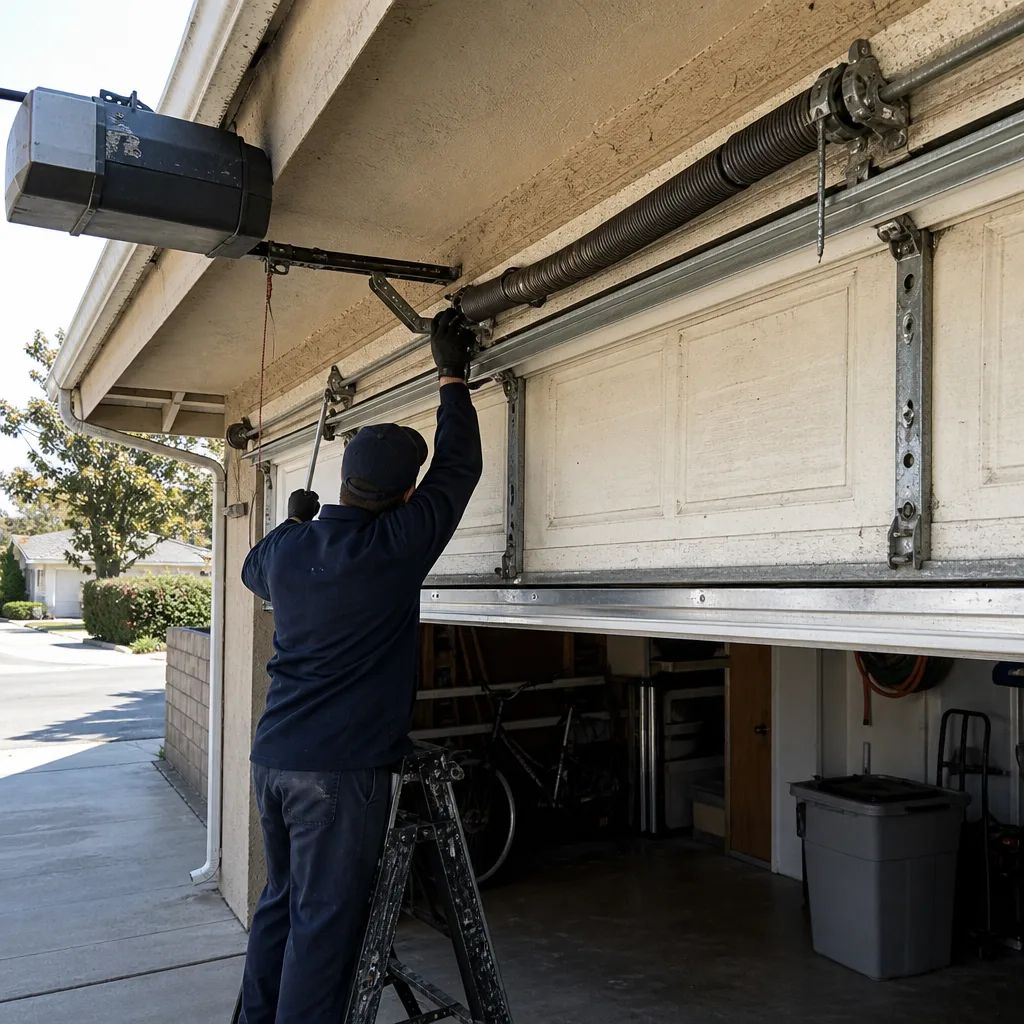 Before
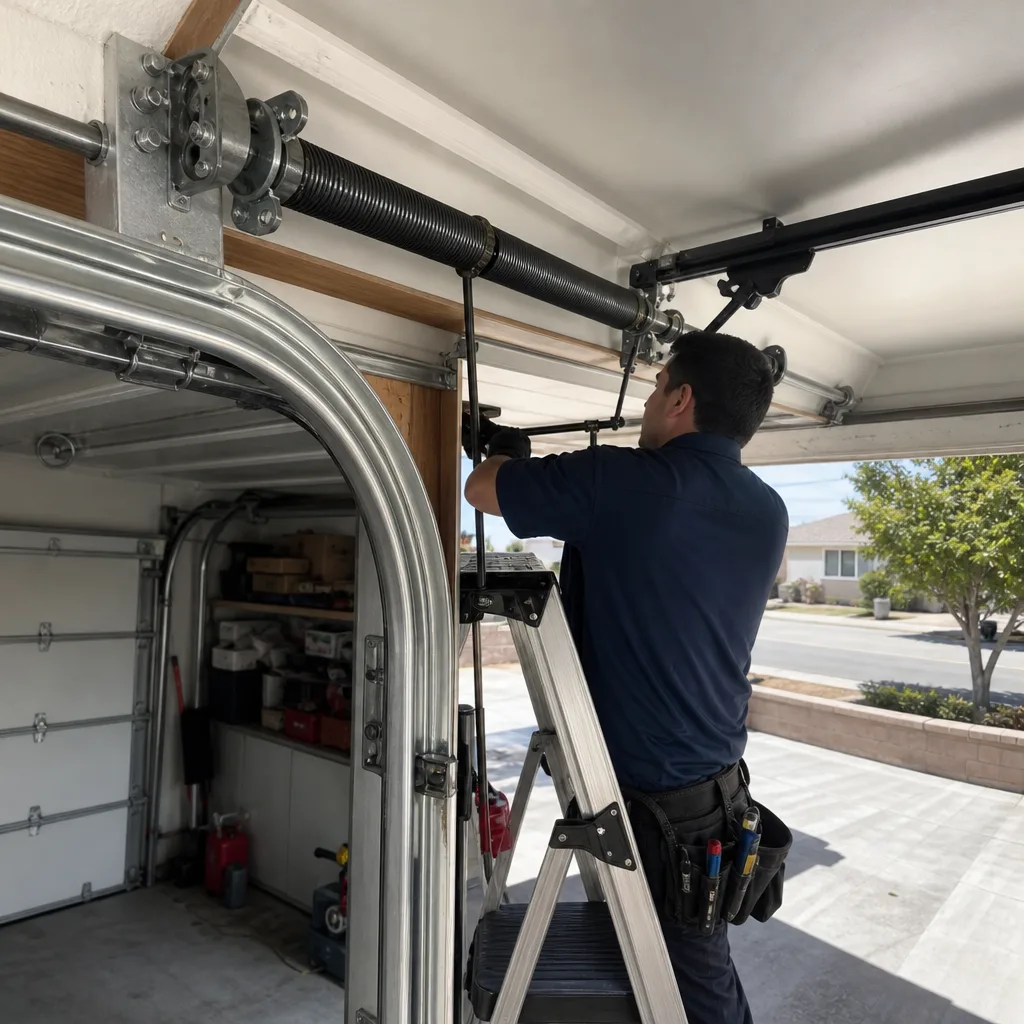 After
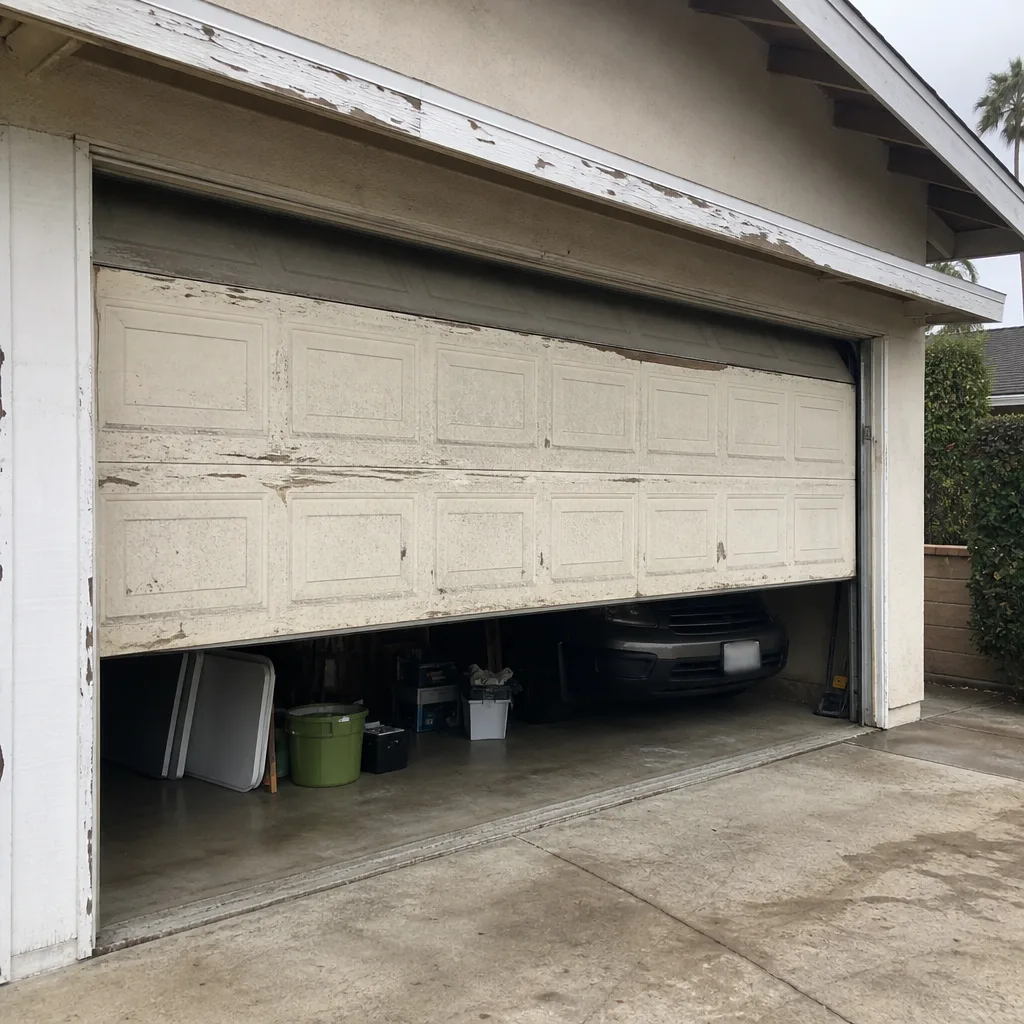 Before
 After
 Before
 After