
Last updated November 2, 2026
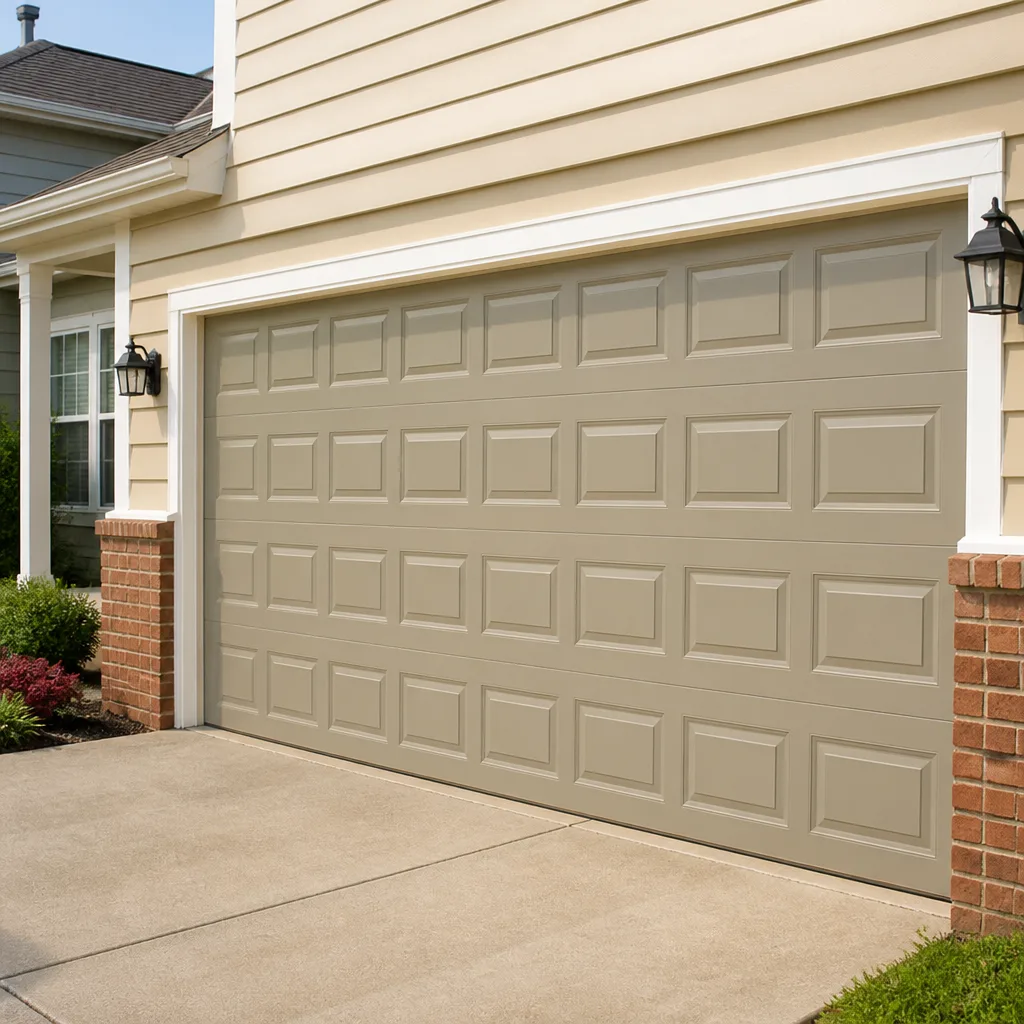 Raised-panel steel
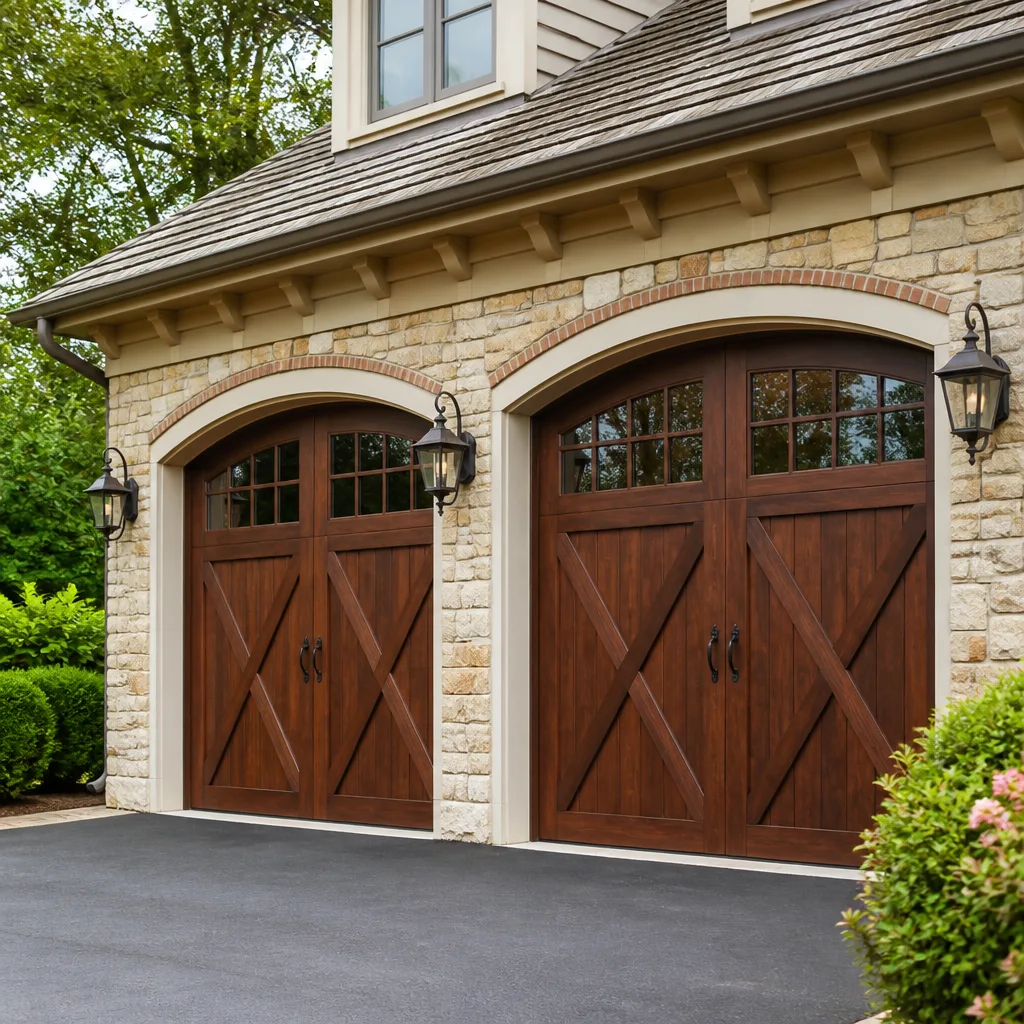 Carriage house
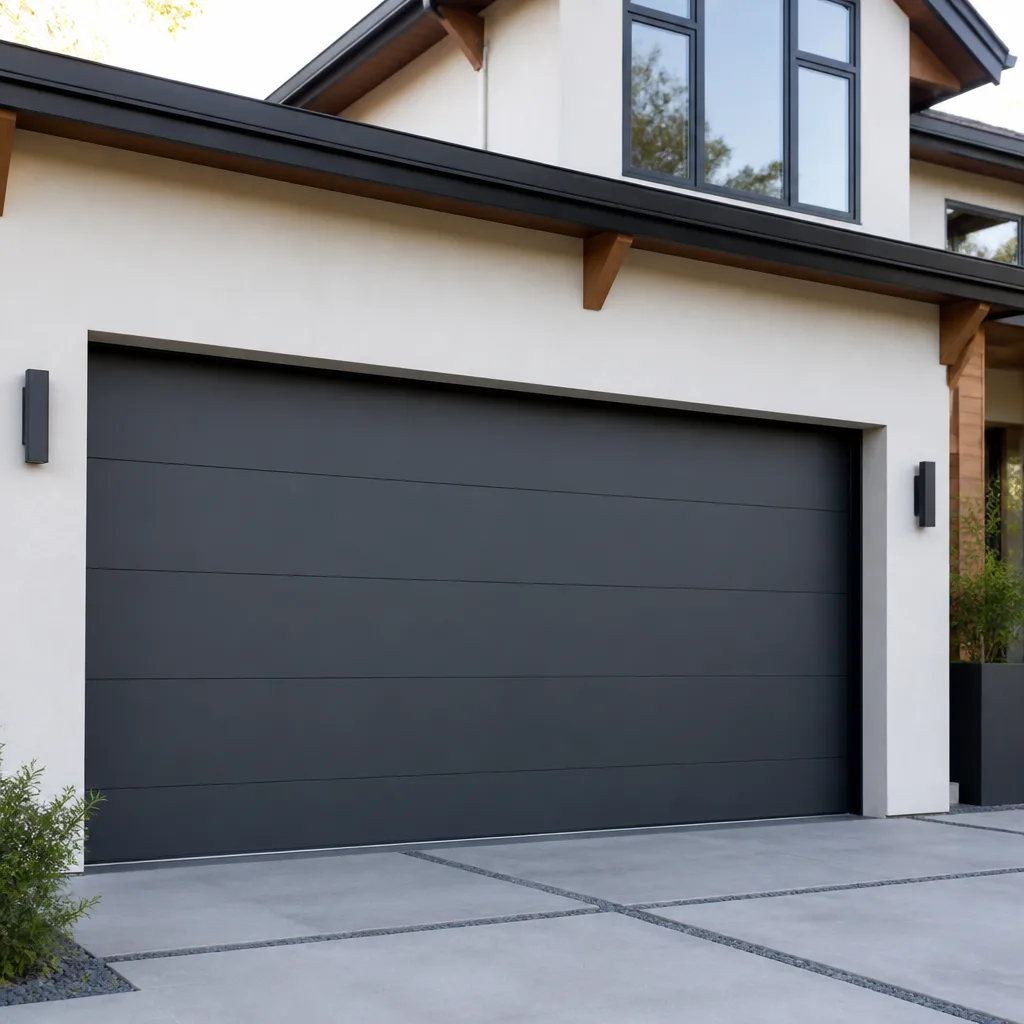 Modern flush
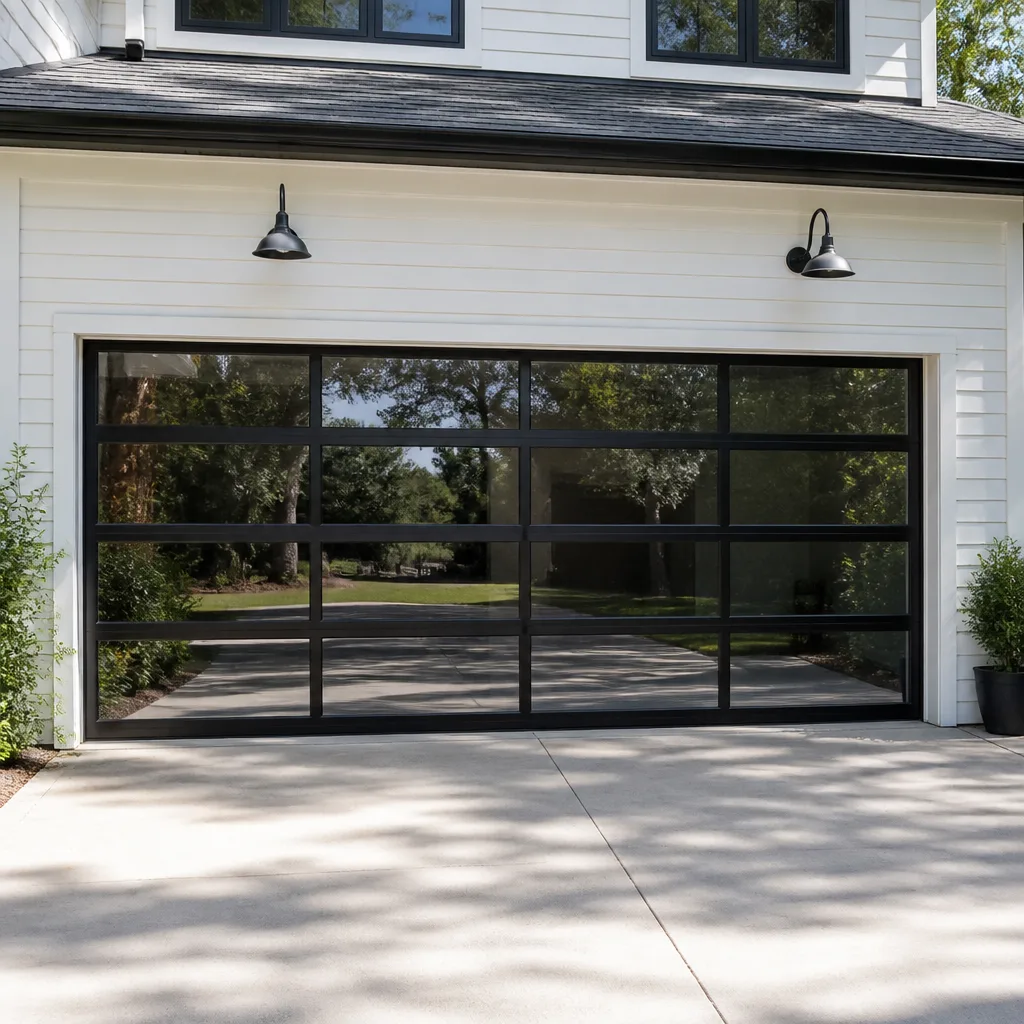 Full-view glass
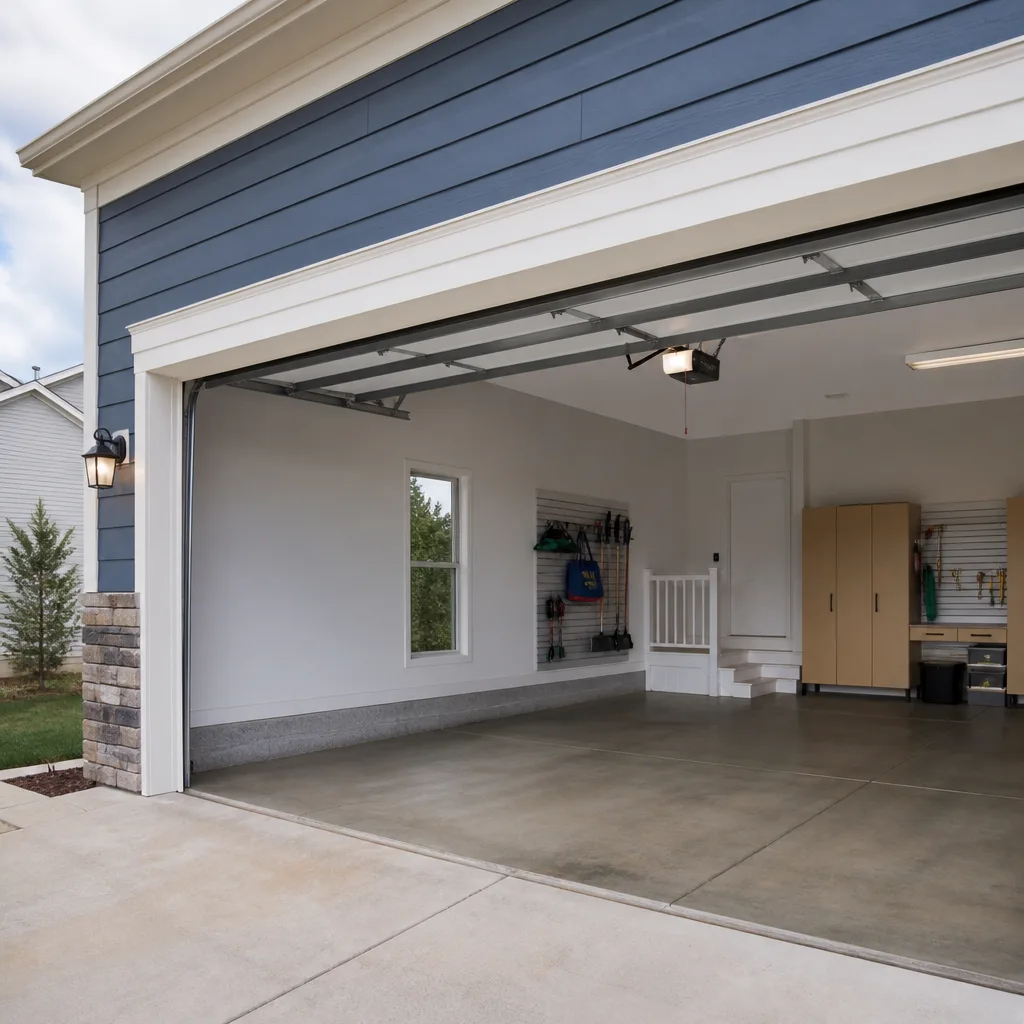 LiftMaster openers
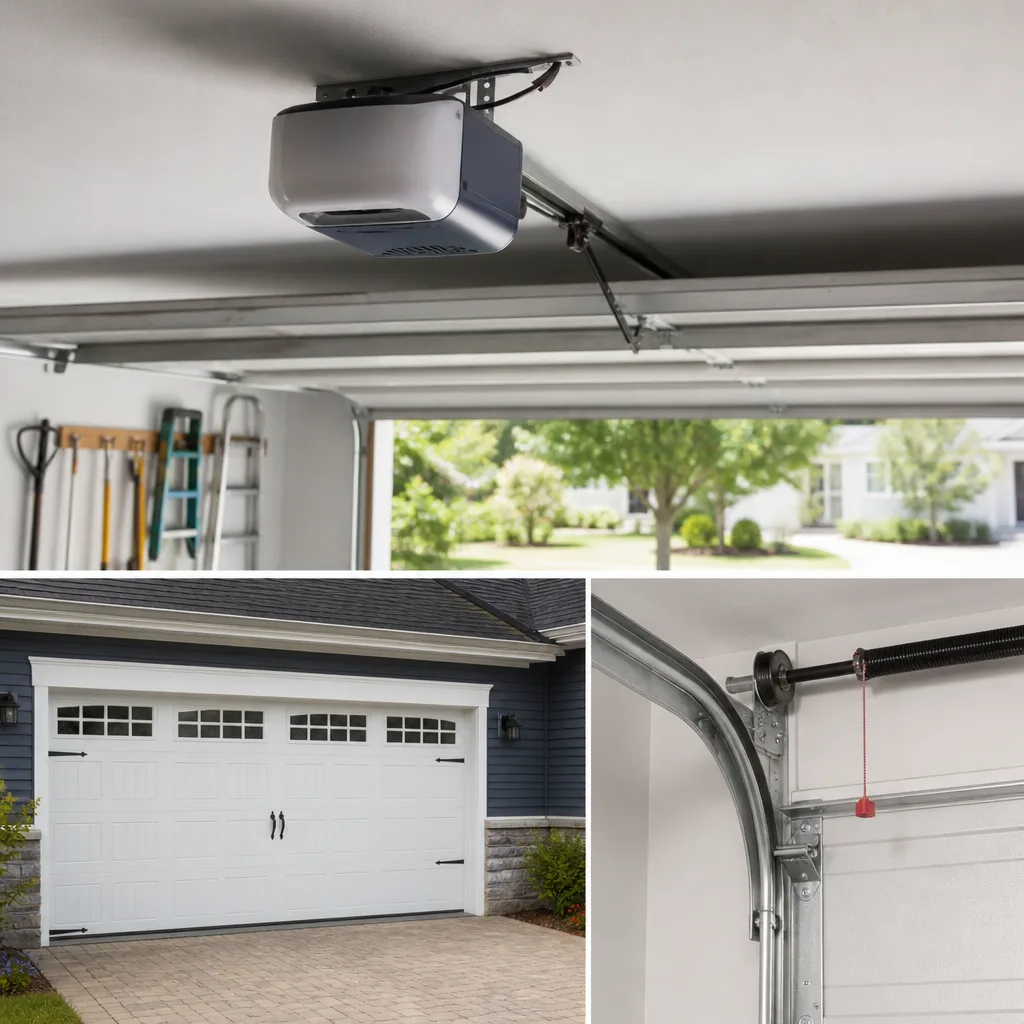 Chamberlain openers
Full 25-point door and opener safety check with every visit - springs, cables, rollers, tracks, and your LiftMaster or Chamberlain opener included
You get a price before we start. It does not change when the truck arrives.
Get your free estimateGarage Door Repair Maintenance Checklist for Fountain Valley Homeowners
Most maintenance checklists end with “call a professional if you notice anything unusual,” which is about as helpful as a smoke detector that only beeps after the house burns down. This checklist tells you what unusual actually looks like, what it costs to ignore it, and which items you can resolve in ten minutes with a $6 tube of lithium grease. Fountain Valley homeowners deal with a specific set of conditions: coastal humidity, salt air drifting up from Huntington Beach, and residential streets where nearly every home uses its garage as the primary entry point. Your garage door is the largest moving part in your home, and it cycles 1,500 to 2,000 times a year. We wrote this guide because we’ve diagnosed thousands of doors in Fountain Valley, and most failures gave clear warning signs months before the repair bill arrived.
Quick Answer
A proper garage door maintenance checklist for Fountain Valley homes includes quarterly lubrication of rollers and hinges with lithium grease, monthly safety sensor alignment checks, spring wear inspection with visual rust and gap criteria, and an annual balance test that catches spring fatigue before it strands your car in the driveway. Most of these tasks take under 15 minutes each, and skipping them is what turns a $180 spring replacement into an $850 opener motor replacement when the opener burns out fighting a door it was never meant to carry alone.
Styles & brands we work with
- Raised-panel steel
- Carriage house
- Modern flush
- Full-view glass
- LiftMaster openers
- Chamberlain openers
Table of Contents
- Coastal Rust Checkpoints: What Fountain Valley Humidity Does to Hardware
- Torsion Spring Wear Indicators: Measurements, Not Guesswork
- The Opener Sensitivity Test That Catches Sensor Drift Before It Strands You
- Lubrication Points: Lithium Grease vs. Silicone Spray (and What to Never Touch)
- Quarterly vs. Annual Tasks: Stop Doing Unnecessary Work
- The 10-Second Balance Test That Reveals Spring Health
- Noise Diagnostics: What Each Sound Tells You
- Weather Seal and Track Inspection for Fountain Valley’s Coastal Air
At Steward Garage Door Repair, we’ve built our reputation in Fountain Valley on knowing exactly which brands age gracefully in this climate and which ones need more attention. LiftMaster openers, for instance, are the most common unit we service in this area, and Chamberlain systems hold up well but their safety sensors are more sensitive to dust and humidity drift than most homeowners expect. If you’d rather skip the checklist and have a trained eye walk your system, our Garage Door Repair in Fountain Valley service includes a full inspection with every visit. But for the hands-on homeowner, here’s the full pass/fail criteria, section by section.
Coastal Rust Checkpoints: What Fountain Valley Humidity Does to Hardware
Fountain Valley sits about four miles from the Pacific, and that proximity shows up in your garage hardware before anywhere else. Salt air and humidity cycles mean unpainted steel components rust faster here than they do in Riverside or Santa Ana. The good news: rust on a garage door is rarely a structural emergency. It’s a timeline indicator. What matters is where the rust is and whether it’s cosmetic or functional.
What to Check Every Quarter:
- Hinge plates where door panels connect. Surface rust is cosmetic. Rust that flakes when you scrape it with a fingernail means the hinge metal is thinning. Thinned hinges bend, then snap, and when a hinge snaps the panel it supported takes the full weight of the door. That’s a $40 hinge turning into a $400 panel replacement.
- Roller stems where the wheel meets the shaft. If you see orange discoloration at that junction, the bearing is compromised. Roller bearings with rust make a grinding noise and chew through the track over time.
- Bottom bracket where the cable attaches to the door. This is the one rust checkpoint we treat as urgent. The bottom bracket carries the full cable tension, and bracket failure in Fountain Valley homes is the most common cause of a door dropping hard on one side. If your bottom bracket shows rust plus any bowing or misalignment, call us before using the door again.
- Track surfaces on galvanized steel. Fountain Valley homes built before 1990 sometimes have non-galvanized tracks, and those rust in horizontal bands where condensation forms overnight. Light rust on the outside track surface is normal. Rust on the inside rolling surface is not. That surface must stay smooth or the rollers bind, and a bound roller turns your opener into a burnout candidate.
Visual Pass/Fail Criteria for Fountain Valley Homes:
- PASS: Rust present but no flaking, no deformation, and hardware still holds its original shape. Clean it with a wire brush, apply a thin coat of white lithium grease to protect the surface, and move on.
- FAIL: Flaking, scaling, bent brackets, rust streaks running down from a joint, or any rust on the inside track surface. These are repair items, not maintenance items. A rust-thinned bottom bracket can fail without warning while the door is mid-cycle.
One thing we see regularly in Fountain Valley: homeowners who replace a rusted hinge with a hardware-store hinge that’s a different gauge than the original. Garage door hinges are sized to the door’s weight and panel thickness. A thinner hinge installs fine and fails within six months. If you’re not confident about hinge gauge specs, this is a ten-minute professional job, not a reason to gamble with a $300 panel.
Torsion Spring Wear Indicators: Measurements, Not Guesswork
Torsion springs are the component that makes your garage door feel light. They do the actual lifting. The opener just guides the door along the track, contrary to what most homeowners assume. When a spring wears out, the opener suddenly has to lift 150 to 300 pounds by itself, and openers are not built for that job. A LiftMaster or Chamberlain opener will usually burn out a circuit board or strip a gear within two to four months of carrying a dead spring. So spring wear is an opener problem waiting to happen.
Most checklists say “inspect springs for wear.” Here’s what wear actually looks like on a torsion spring, the kind mounted on a horizontal shaft above the door opening.
Measurement-Based Wear Indicators:
- Coil gap check: A healthy torsion spring has tightly wound coils with no visible gap when the door is closed. If you see daylight between coils, that spring has lost tension. The door isn’t actually resting; the spring is partially unwound. This is the single most accurate early warning sign, and it costs nothing to check.
- Rust pitting measurement: Surface rust on a torsion spring is normal. But if the rust has created visible pitting, tiny craters in the metal surface, the spring’s integrity is compromised. Pitted springs snap. When a torsion spring snaps, it releases stored tension instantaneously. That’s the loud bang Fountain Valley homeowners describe when calling us. If you have pitting, don’t try to replace the spring yourself. The tension in a wound torsion spring can kill. This is a job for a trained professional with the correct winding bars.
- Symmetry check: Look at both springs (if your door has two). Both should show the same coil gap, the same rust level, and the same amount of space between spring and center bracket. One spring visibly stretched longer than the other means unequal load distribution, which wears out both springs faster.
- Cones and set screws: At each end of a torsion spring is a cone with set screws. If the set screws are rusted badly enough that the hex head doesn’t hold a wrench shape anymore, that spring is no longer serviceable. A technician can’t safely unwind a spring they can’t grip.
We’re brand-agnostic when it comes to springs, but we do see differences in how spring quality interacts with Fountain Valley humidity. Clopay and Amarr doors tend to use springs with better factory coating that resists pitting for several years longer than economy springs. Wayne Dalton’s TorqueMaster system, which encloses springs inside a tube, hides these visual checks entirely. If you have a Wayne Dalton door and can’t see springs, the balance test in the next section is your primary diagnostic tool.
In our experience, a torsion spring in Fountain Valley lasts seven to ten years with proper lubrication and alignment. The ones that fail at year four are almost always doors that were never balanced after a panel repair or opener replacement, or doors where the spring was wound to the wrong tension from day one.
The Opener Sensitivity Test That Catches Sensor Drift Before It Strands You
Most garage door opener failures in Fountain Valley are misdiagnosed by homeowners as motor problems when they’re actually sensor problems. The safety sensor system, those two small units mounted about six inches off the floor on each side of the door opening, is the component that tells your opener whether anything is in the door’s path. When those sensors drift out of alignment, the opener behaves erratically: it reverses mid-cycle, refuses to close all the way, or flashes diagnostic codes on the motor housing.
Chamberlain and Genie openers are particularly sensitive to sensor alignment, and Fountain Valley’s humidity speeds up the drift by loosening the mounting brackets over time as the metal expands and contracts. Here’s the test we run on service calls, simplified for homeowners.
The 5-Minute Sensor Test:
- Close the door fully. Stand outside the garage and press the wall button to close it if it’s already open. Wait for the door to reach the fully closed position.
- Check the sensor lights. Walk to each sensor unit. On most LiftMaster, Chamberlain, and Genie models, a solid green light means power and alignment are good, while a flashing or off light means misalignment or obstruction. (Some models use different colors; check your manual if both lights aren’t solid.)
- Wave your hand through the beam. While the door is closed, pass your hand between the two sensors. The door should not move and the sensor light should react. No reaction means the sensor isn’t detecting properly, even if it looks aligned.
- Look at the sensor stands. These are the metal or plastic brackets holding the sensors to the wall or track. If you can wiggle the sensor with one finger, it’s not tight enough. Loose stands are the number one cause of recurring misalignment in Fountain Valley garages.
- Check for corrosion on the wiring. Look where the low-voltage wire enters the sensor housing. White or green crust is corrosion, and it causes intermittent signal loss. Corroded sensor wiring is a repair item, not a maintenance item.
Sensor problems are one of the few garage door issues that are genuinely simple to fix, and they’re also the easiest to get wrong if you start adjusting the sensor angle without a clear reference. If your sensors fail this test and tightening the bracket doesn’t fix it, our Garage Door Opener Repair in Fountain Valley service diagnoses sensors, remotes, circuit boards, and drive systems in one visit. Because we work on LiftMaster, Chamberlain, Genie, and other leading brands regularly, we arrive already knowing what your opener’s diagnostic lights mean.
Lubrication Points: Lithium Grease vs. Silicone Spray (and What to Never Touch)
Here’s the most useful garage door maintenance sentence you’ll read this year: every moving metal part on your garage door needs the right lubricant, and half the “lubrication” advice on the internet is wrong. Using WD-40 on garage door rollers is the single most common maintenance mistake we see in Fountain Valley homes. WD-40 is a solvent, not a lubricant. It strips away existing grease and leaves the metal drier than it started.
Lithium Grease (White Lithium Grease in a Tube or Aerosol):
Lithium grease is thick, stays in place, and doesn’t break down under load. Use it on:
- Hinge pivot points where the hinge leaves rotate against each other. A small dab at each pivot is all you need. Fountain Valley’s humidity means you’ll reapply quarterly; the moist air thins grease slightly faster than dry inland air.
- Torsion spring coils when the door is fully open. Spray or brush a light coating along the spring while it’s extended. This prevents rust pitting, the spring killer we covered earlier. Do this once a year, and don’t overdo it. Grease dripping off the spring is too much and just collects dust.
- Bearing plates at the ends of the torsion bar. If you can see a small round plate at each end of the shaft above the door, that’s the end bearing. Two drops of lithium grease on each bearing plate once a year keeps the shaft turning smoothly.
Silicone Spray:
Silicone spray is thinner and works on plastic against metal. Use it on:
- Nylon rollers with exposed bearings. If your door has white nylon wheels, those wheels have internal bearings that need silicone, not grease. Grease attracts dust and clogs the bearing. Give each roller a short spray at the wheel-shaft junction every six months.
- Weatherstripping tracks on the jamb and header. Silicone keeps the vinyl flexible and prevents the squeaking sound when the door moves against the seal. This matters more in Fountain Valley than inland because the rubber strip takes more thermal cycling from morning marine layer to afternoon sun.
- Opener rails on belt-drive and chain-drive openers. A dry rail causes the opener to work harder. A short silicone mist along the rail every six months is enough. Don’t lubricate the belt itself, only the rail surface under it.
Never Lubricate These:
- Steel rollers with sealed bearings. If your door has steel wheels without visible bearing access, they’re sealed. Lubricating them just makes the track greasy.
- The track itself. Garage door tracks do not need oil. The rollers are designed to roll on dry track surfaces. Oily tracks collect soil and grit from Fountain Valley streets, and that grit grinds down roller wheels.
- Safety sensor lenses. Cleaning is fine, but no lubricant or polish of any kind. Residue on the lens refracts the beam and causes false obstructions.
- Any part of the opener’s plastic housing or gear cover. Openers are sealed units. Nothing outside needs oil, and oil inside voids the manufacturer’s design.
If you have a Genie or Chamberlain opener and you’re unsure whether your model needs rail lubrication, the manual’s maintenance section is your reference. Some newer belt-drive openers ship with self-lubricating rails or belts. For quiet-belt units, leave the belt alone.
Quarterly vs. Annual Tasks: Stop Doing Unnecessary Work
Here’s who this section is for: the Fountain Valley homeowner who does monthly garage door maintenance out of diligence and ends up causing more wear than they prevent. Over-lubrication is a real thing. Over-tightening is a real thing. The right maintenance schedule is quarterly for wear-susceptible items and annual for everything else.
Quarterly Tasks (Every 3 Months):
- Sensor alignment check using the 5-minute test from earlier. Humidity drift is slow but steady in Fountain Valley, and quarterly checks catch it before the system faults.
- Visual rust sweep of all hinge plates, roller stems, bottom brackets, and track surfaces. Use the pass/fail criteria from the coastal rust section.
- Lubrication of hinge pivots and nylon roller bearings with the appropriate product. Ten minutes, start to finish.
- Noise listening test: open and close the door three times. Grinding, rattling, or new squeaks get investigated. A door that’s getting noisier every month is telling you something mechanical is wearing, not just dry.
Annual Tasks (Once a Year):
- Full balance test (procedure in the next section). Spring tension degrades slowly, and annual testing catches a 10% tension loss before it becomes a 100% tension loss.
- Torsion spring lubrication and visual gap check. Annual spring service doubles the useful life of the spring in most cases.
- Track alignment measurement using a level against the vertical track on both sides. Tracks drift slight out of true over a year of door cycles, and misaligned tracks are what cause premature roller wear.
- Opener force setting verification. Most openers have a force or sensitivity dial or digital setting. If it’s set too high, the door will close on a small object instead of reversing. This is a genuine household safety issue; in our experience, roughly one in four Fountain Valley homes we visit has the force setting dialed up by a previous owner or previous technician.
- Weather seal inspection along the bottom of the door and the side jambs. Cracked seals are not cosmetic. They let in dust, moisture, and in Fountain Valley specifically, they let in the spiders and crickets drawn to garage shelter. Replace cracked seals before the rainy season.
The reason we split quarterly from annual is straightforward: quarterly items are the ones where early detection saves real money. Annual items are the ones where seasonality matters and frequent checking adds no value. A balance test every week is just you opening and closing your door manually for no diagnostic benefit, because spring degradation doesn’t happen week over week.
The 10-Second Balance Test That Reveals Spring Health
The torsion spring balance test is the single most revealing diagnostic a homeowner can perform, and it takes less time than reading this paragraph. Here’s why it matters: a properly balanced door, when disconnected from the opener, should stay in place when opened halfway. If it drops, the springs are weak. If it rises, the springs are over-wound (which is rare but happens after amateur spring replacements). Either condition forces your opener motor to work harder than it should, and the repair that follows is always more expensive than fixing the spring early.
How to Run the Balance Test:
- Close the door fully. Pull the red emergency release handle hanging from the opener trolley. This disconnects the door from the opener rail. The door is now manual.
- Lift the door by hand to the halfway point. Use the handles or the bottom edge. A balanced door requires about 8 to 12 pounds of lift force at the bottom and feels nearly weightless at the halfway point.
- Let go at halfway. Stand clear of the door path. If the door stays within a few inches of where you released it, springs are healthy.
- Observe the result: A door that drops more than 6 inches is under-sprung. A door that climbs more than 6 inches is over-sprung. Either result means spring replacement or adjustment is needed.
- Reconnect the door to the opener. Pull the red handle again and run the opener until the trolley re-engages with the door arm.
In Fountain Valley, we’ve seen under-sprung doors on homes near the Greenbrook and Parkside neighborhoods where older Clopay doors have been in service since the 1990s. Those springs are often original, and after 25 years of coastal air, they’re tired. The doors still open and close, which lulls homeowners into thinking everything is fine, but the opener is doing double duty. The eventual repair is an opener replacement, not a spring replacement, because the motor burned out. A 10-Second balance test would have flagged the spring issue years earlier.
One caution: if your door is a Wayne Dalton with the enclosed TorqueMaster system, you can still run this test, but you won’t be able to see the springs. In that case, the balance test result is your entire spring diagnostic. A failing TorqueMaster spring shows up exclusively as a door that drops at the halfway point.
Noise Diagnostics: What Each Sound Tells You
Garage doors make noise. Fountain Valley homes are close enough together that a noisy door at 6 a.m. is a neighbor issue as well as a mechanical one. But noise is also a diagnostic language. We diagnose more than half of our repair calls over the phone just from the sound the homeowner describes. Here’s the field guide.
What You Hear and What It Means:
- High-pitched squeal during opening or closing: Dry hinge pivots or dry torsion spring. This is the lubrication fix from earlier. Ten minutes with lithium grease.
- Grinding or crunching while the door moves: Roller bearings are failing or the track has collected sand and grit. Fountain Valley’s wind blows fine sediment from the Santa Ana River channel into open garages, and that sediment works into track surfaces. Clean the track with a dry rag (no lubricant), then inspect roller wheels for wobble.
- Rattling or slapping during operation: Loose hardware. The door panels, track bolts, or hinge plates have worked loose over thousands of cycles. A rattling hinge that’s ignored becomes a broken hinge. Tighten all visible bolts in the track and on hinge plates against the door.
- Popping or banging from the opener: The opener’s gear or sprocket is slipping. This is an opener problem, not a door problem. On chain-drive openers, a popping sound often means the chain tension needs adjustment. On belt-drive units, it can mean the belt has stretched. Both are service items for a technician familiar with your opener brand.
- Groaning under load: The opener motor is straining. Either the door is out of balance and the opener is compensating, or the opener’s capacitor is aging. Run the balance test first. If the door balances, the opener itself needs attention.
- Rumbling vibration through the ceiling: The opener mounting brackets have loosened. Over time, vibration from the opener unscrews the lag bolts holding the unit to the ceiling or header. A vibrating opener is a falling hazard if left unresolved.
We carry parts for LiftMaster, Chamberlain, and Genie openers in our service vehicles, and we’ve learned through years of Fountain Valley service calls that an opener noise that sounds “fine” to a homeowner is often a clear diagnostic to a technician. If your door makes a sound that’s new, that’s your maintenance cue. New sounds don’t appear without a cause.
Weather Seal and Track Inspection for Fountain Valley’s Coastal Air
The bottom weather seal on a garage door is a wear item, not a fixture. It’s made of vinyl or rubber, and it degrades on a schedule that has nothing to do with how often you use the door. Sun exposure, salt air, and daily temperature swings all break down the material over time, and Fountain Valley delivers all three. The seal’s job is to keep water from sliding under the door during winter rain, to keep dust and debris out during Santa Ana winds, and to keep conditioned air in during summer. A cracked seal fails all three.
Weather Seal Inspection Steps:
- Close the door and look for daylight. Kneel at a corner of the closed door and look across the threshold. If you see light under the door anywhere along its width, the seal isn’t sealing. On Fountain Valley’s slab-on-grade homes, a gap also means your garage is open to rodents, which are a known issue in older Fountain Valley neighborhoods.
- Press your thumb into the seal. A healthy vinyl seal flexes and springs back. A weathered seal stays compressed or crumbles. Cracks that stay open after flexion are too far gone.
- Run your hand along the length. The seal is a single long strip unless the door is sectional, where each panel has its own seal. If you find splits, tears, or sections where the seal has pulled loose from its retainer track, replace the whole run rather than patching. Patches leak.
- Check the side and top seals. These are vertical strips attached to the jamb on each side and a header seal above the door. They compress when the door closes. Crumbs or tears in the side seals mean bugs, dust, and moisture are getting in around the door perimeter, not under it.
Track inspection goes hand in hand with the seals. The vertical tracks bolted to the door jambs guide the rollers, and they are under lateral force on every cycle. Over a year in Fountain Valley’s climate, track bolts back out slightly as the metal expands and contracts. Check that the track is fully seated against the jamb and that no gap has formed between track and wall. A track that’s pulled away from the wall by even an eighth of an inch changes the roller geometry, and rollers that don’t track true wear out their bearings at triple speed.
If the weather seal is due for replacement while you’re also due for a spring service or opener adjustment, our Garage Door Installation in Fountain Valley team can handle the full job in one visit. For older Clopay and Amarr doors where the original seal has aged, we can match the replacement profile to the door brand rather than using a generic retrofit strip that may not seat correctly in the retainer.
Common Mistakes to Avoid
- Using WD-40 as a lubricant. WD-40 is a solvent that strips existing lubrication and accelerates wear. It is not a garage door lubricant, and using it on hinges or rollers means the parts run dry within weeks.
- Lubricating the track. Tracks are meant to be dry surfaces. Oily tracks collect the fine grit that blows through Fountain Valley during Santa Ana events, and that grit grinds roller wheels into flat spots.
- Ignoring a noisy door because it still opens. New noises are the earliest warning sign of mechanical failure. A door that opens and closes fine while making a new grinding noise is a door that’s weeks or months from failing at the worst possible time.
- Tightening torsion spring hardware without training. The torsion spring is under enormous tension. The set screws on the winding cones hold that tension, and messing with them without the right tools and training has caused serious injuries and deaths. This is the one component on your garage door that should never be a DIY project.
- Retightening loose hinge screws instead of replacing the hinge. If a hinge bolt has worked loose once, the hole has elongated. Retightening it means the bolt loosens again, but this time the hinge plate has more play, and the panel connection degrades faster. Loose hinge hardware on a regularly used door in Fountain Valley usually means the hinge itself is worn.
- Adjusting opener force settings to fix a door that reverses mid-cycle. The force setting is a safety feature. If your door reverses when closing, the sensors are misaligned or obstructed, not the force setting. Crank the force higher and you disable the auto-reverse that protects your family. The right fix is sensor alignment, not force adjustments.
- Skipping annual balance testing because the door “works fine.” Spring fatigue is invisible until it’s advanced, and by the time it’s advanced, the opener has been straining for months. The balance test costs nothing.
See the difference
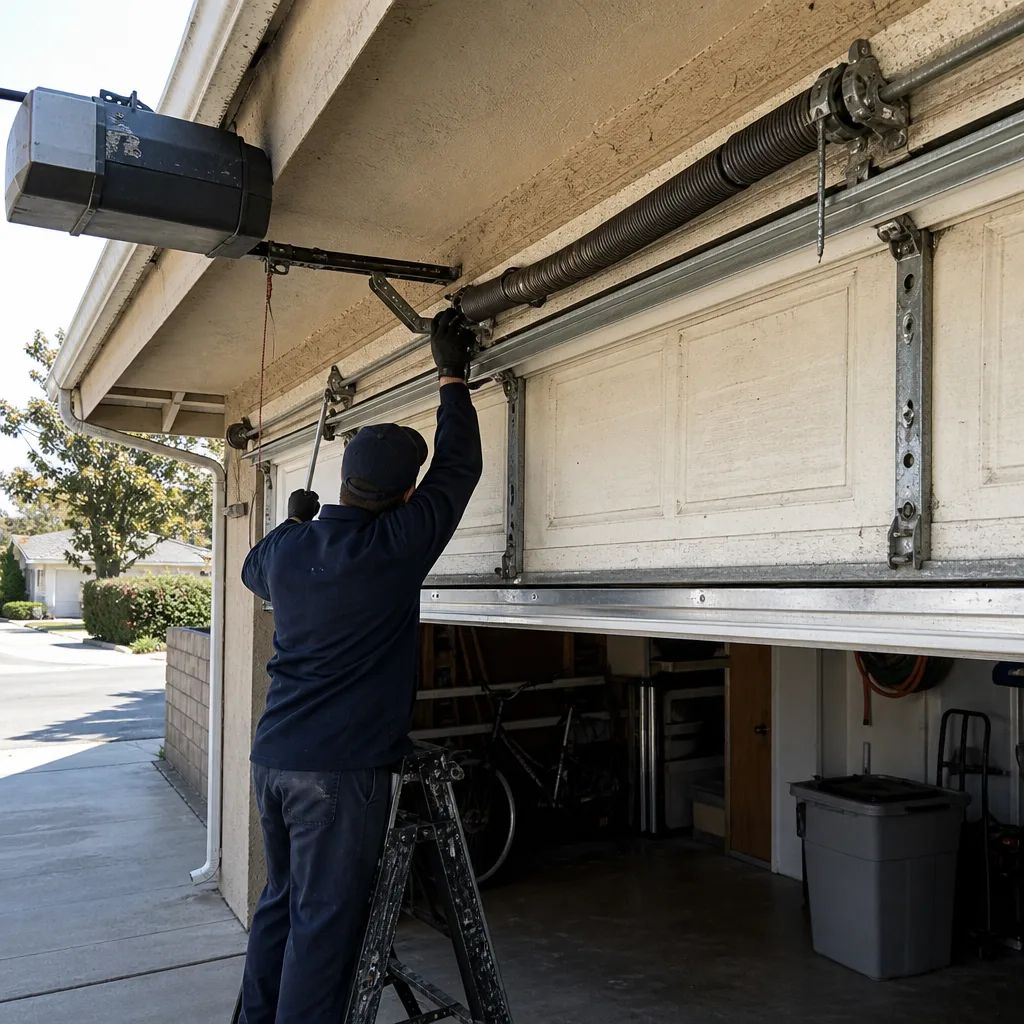 Before
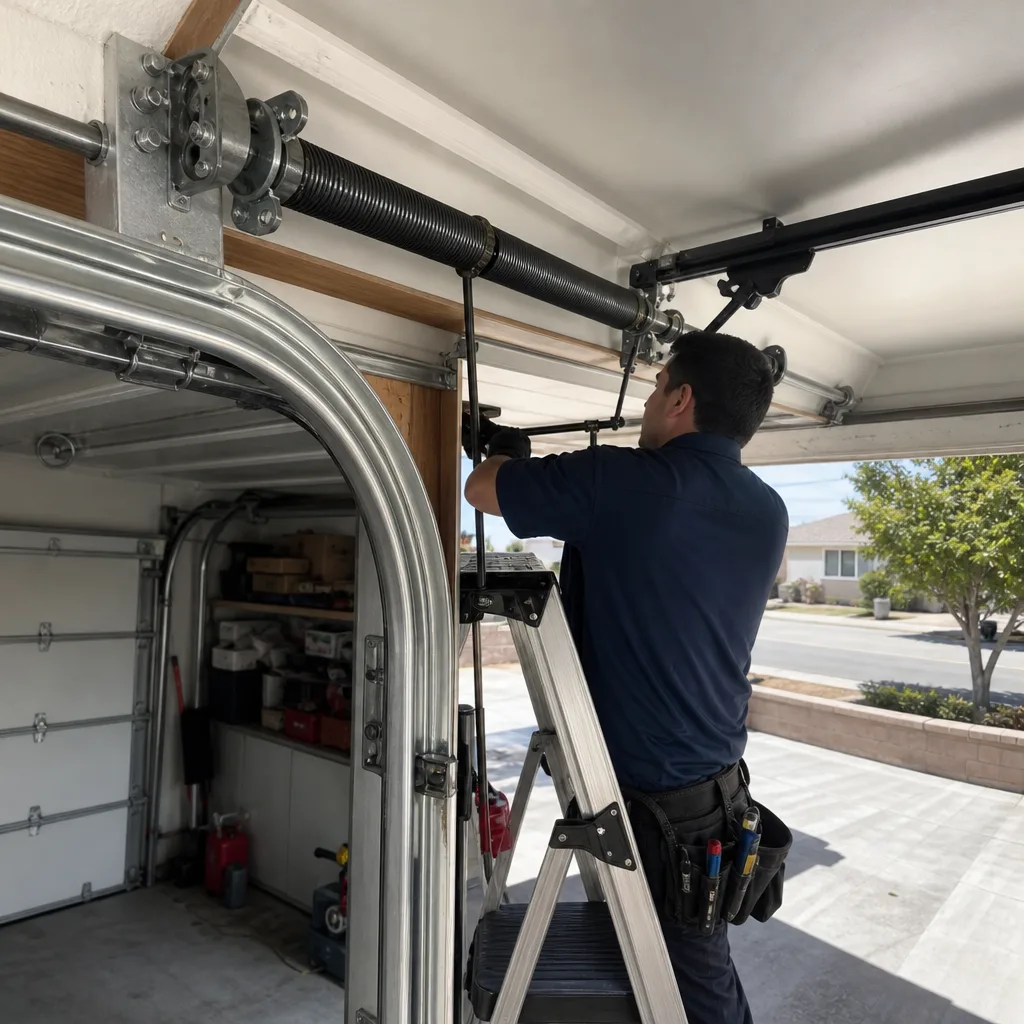 After
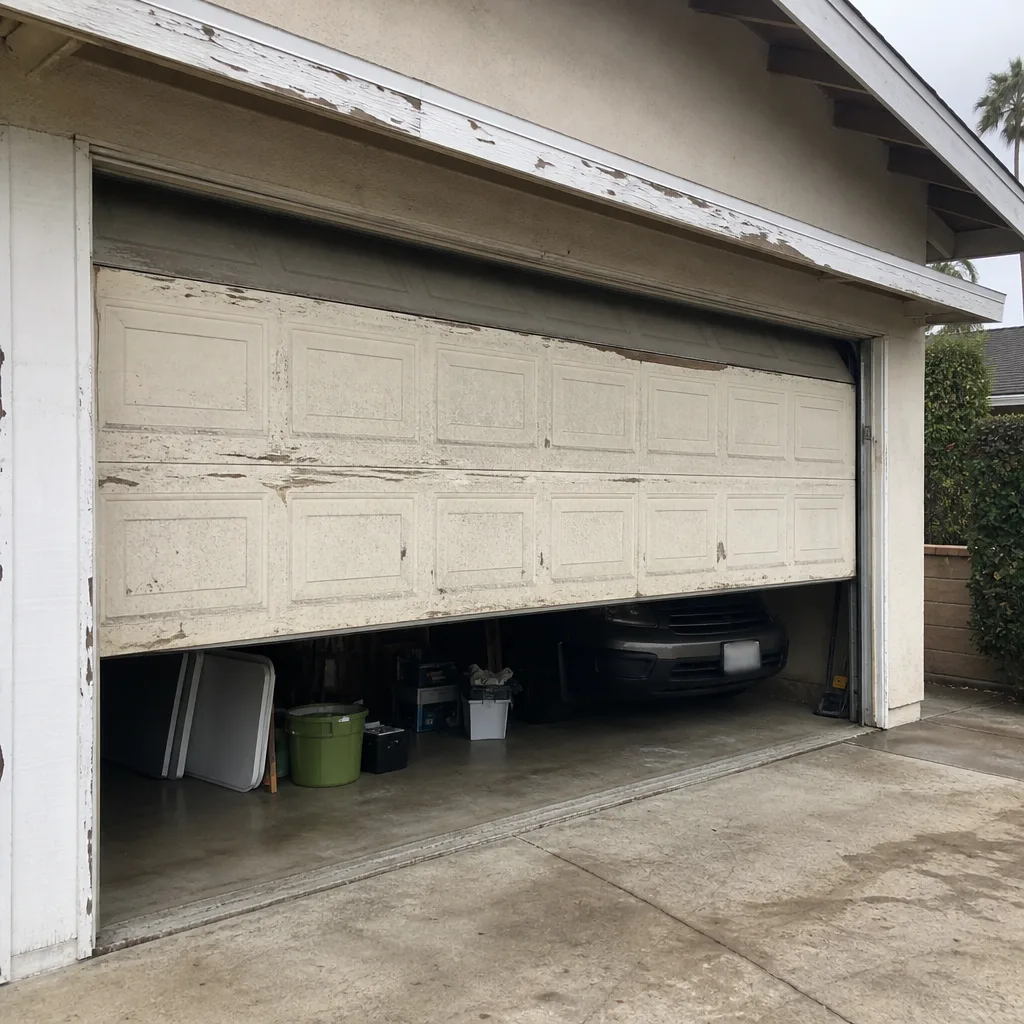 Before
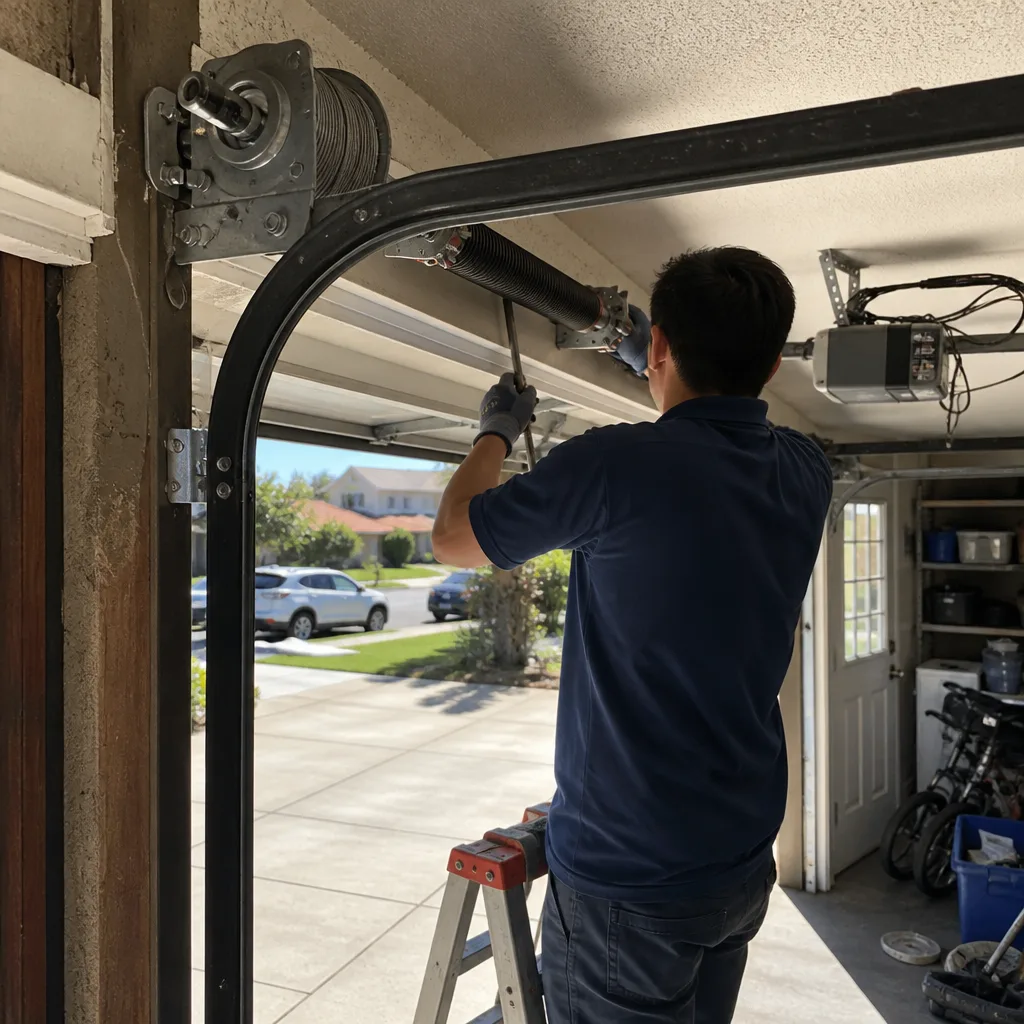 After
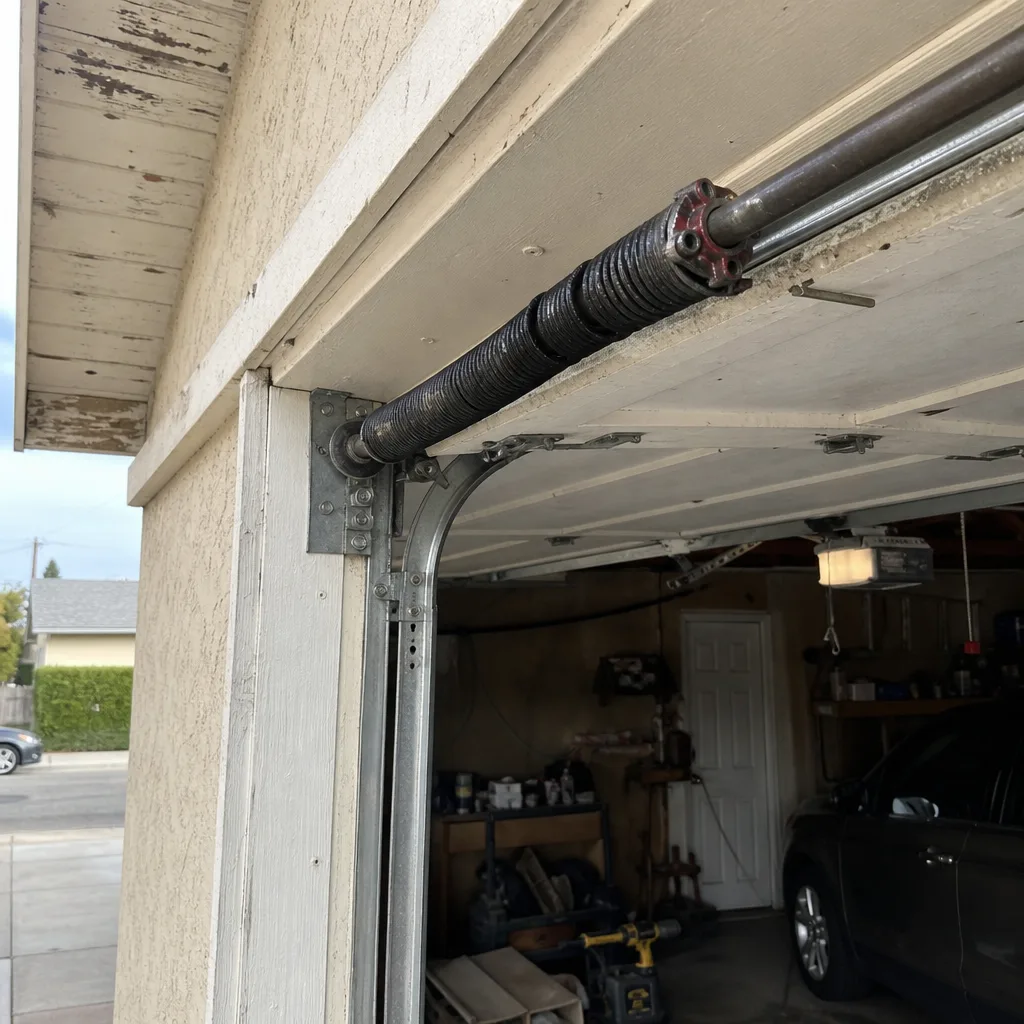 Before
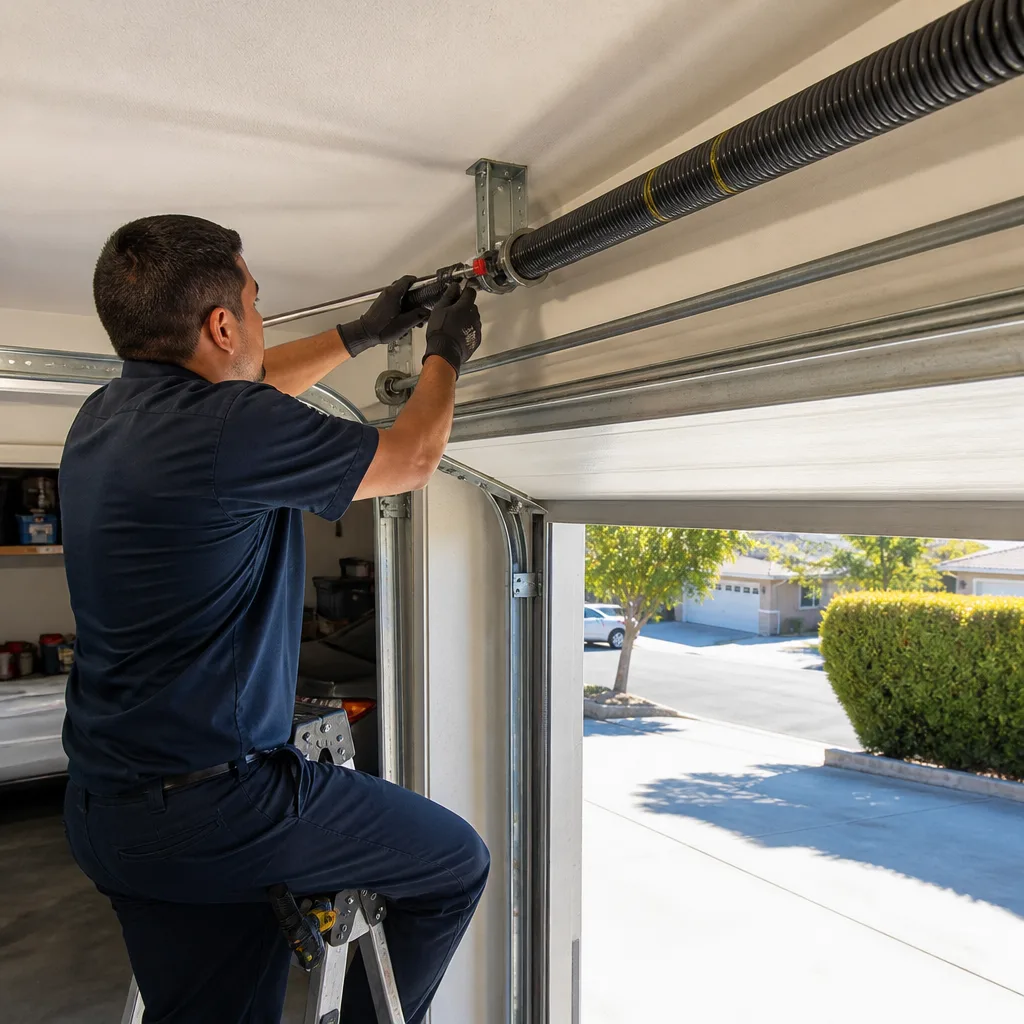 After
When to Call a Professional
Some garage door problems are maintenance, and some are repair, and the line between them is specific. Call a professional when you see rust pitting on torsion springs, when your balance test fails, when the bottom bracket shows any sign of bowing or movement, when the door makes a banging sound from the opener mechanism, or when your safety sensors fail the alignment test and bracket tightening doesn’t fix it. These items involve stored spring tension, structural load paths, or opener diagnostics that require brand-specific training and the right tools. Steward Garage Door Repair offers free estimates in Fountain Valley, and our technicians know your exact setup before they arrive, because we work daily with doors and openers from every major manufacturer. If you own a LiftMaster, a Chamberlain, a Genie, or a Clopay system, we know what its common failure points are and what a proper repair looks like. Call (877) 759-1759 and we’ll walk the door with you, answer your questions plainly, and quote the job before any work starts. Your garage door is your home’s largest moving part, and it’s worth a trained eye.
Frequently Asked Questions
Every three months for hinge pivots and roller bearings, and once a year for torsion springs and bearing plates. Fountain Valley’s coastal humidity breaks down lubrication slightly faster than inland climates, so quarterly lubrication is the right rhythm for most homes in the area. Use white lithium grease on metal pivot points and silicone spray on nylon rollers and weatherstripping. Call (877) 759-1759 if you’re not sure which product applies to your door’s hardware.
Most torsion spring replacements in Fountain Valley run between $180 and $340 depending on the spring size and whether the door uses one spring or two. The cost of ignoring a worn spring is much higher: a dead spring that forces the opener to carry the door full-time usually burns out the opener within a few months, and opener replacement runs $350 to $600 on top of the spring work. Call (877) 759-1759 for an exact quote on your door.
The most common cause is misaligned or obstructed safety sensors, located about six inches off the floor on each side of the door opening. Fountain Valley’s humidity loosens sensor brackets over time, causing drift. Run the 5-minute sensor alignment test described above, and if tightening the bracket doesn’t resolve it, the sensor or its wiring may need replacement. Our Garage Door Opener Repair in Fountain Valley service diagnoses this issue in a single visit.
No, and this is not a matter of experience or confidence. Torsion springs are wound under hundreds of pounds of torque, and the winding and unwinding procedure requires specific tools and training. A mistake releases all that stored energy at once, and the injuries are catastrophic. This is the one garage door repair that no homeowner should attempt. Call (877) 759-1759 and a trained professional will handle it safely.
A well-maintained opener in Fountain Valley lasts 10 to 15 years, but coastal air can shorten that. Salt air and humidity accelerate corrosion on the opener’s circuit board and motor windings. Genie and LiftMaster units with exposed logic boards in humid garages tend to fail earlier than units in climate-controlled garages. If your opener is over 10 years old and showing intermittent behavior, get it checked before it fails completely.
Repair makes sense when the door panels, tracks, and springs are structurally sound and the only issue is a worn component. Replacement makes sense when multiple panels are rusted through, the track system is corroded, or the door is over 20 years old and the cumulative repair costs are approaching replacement cost. Our Garage Door Installation in Fountain Valley team gives you both numbers in writing, repair versus replace, before any work starts. You decide with complete information.
The Bottom Line
Your garage door cycles more than a thousand times a year, and in Fountain Valley’s coastal air, it wears on a schedule. The maintenance tasks that matter are specific: quarterly rust checks on hinge plates and bottom brackets, quarterly lubrication of hinge and roller pivot points, annual balance testing to catch spring fatigue, and sensor alignment whenever the door starts misbehaving. The tasks that don’t matter are just as specific: monthly lubrication, oiling the track, and adjusting opener force settings are all either wasted effort or actively harmful. The goal isn’t a perfectly quiet door. It’s a door that doesn’t strand you on a Monday morning. If any item on this checklist shows a fail condition, don’t wait. Call (877) 759-1759 for a free estimate, and we’ll tell you exactly what’s wrong, what it costs to fix, and what can wait. That’s what Steward means: we treat your home the way we’d treat our own.
Written by the team at Steward Garage Door Repair, serving Fountain Valley since 2014.