
Last updated November 3, 2026
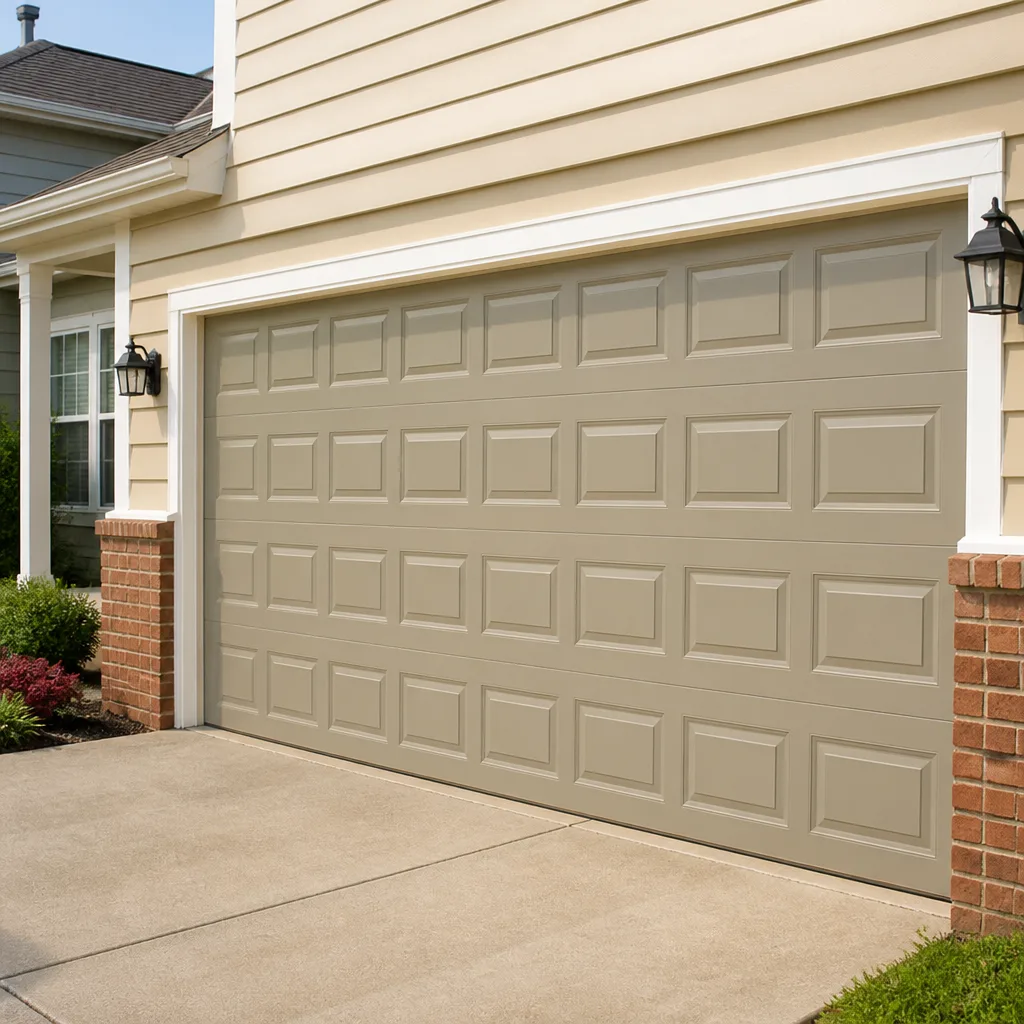 Raised-panel steel
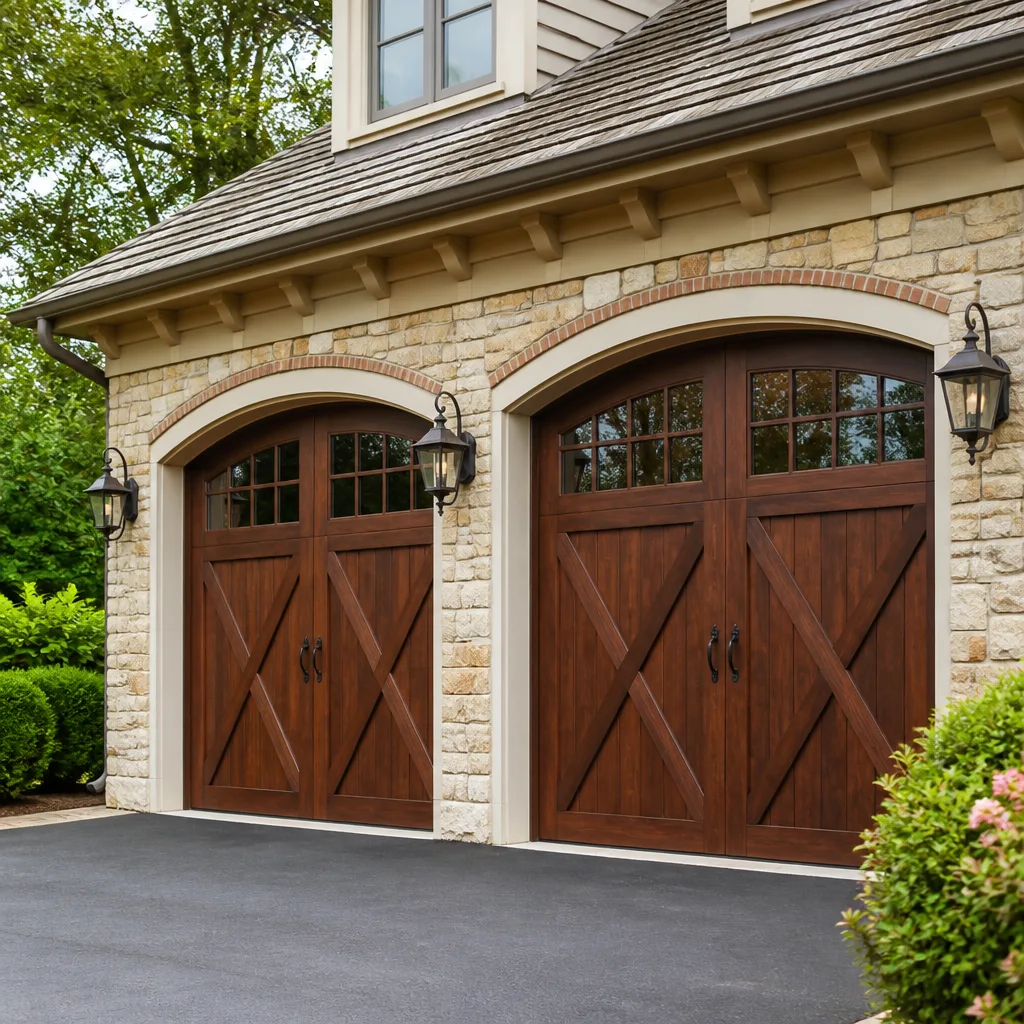 Carriage house
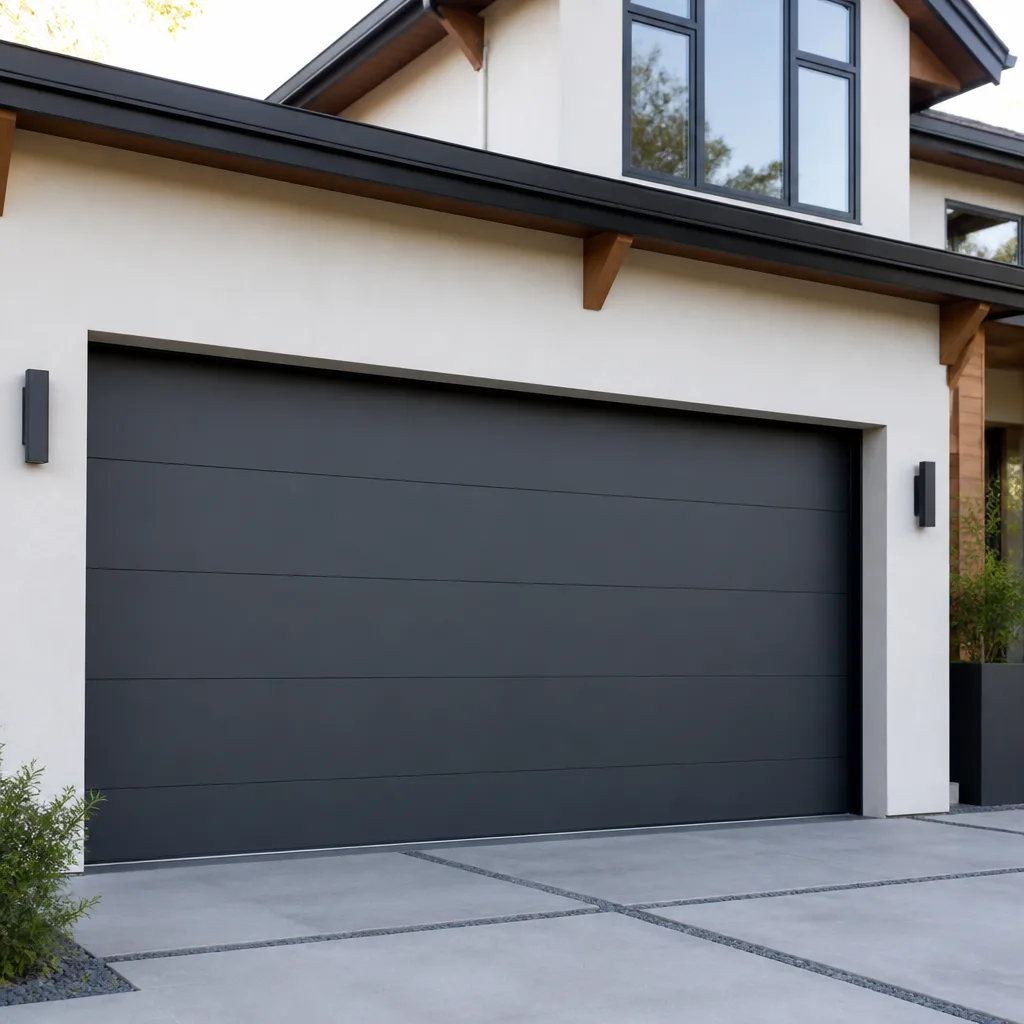 Modern flush
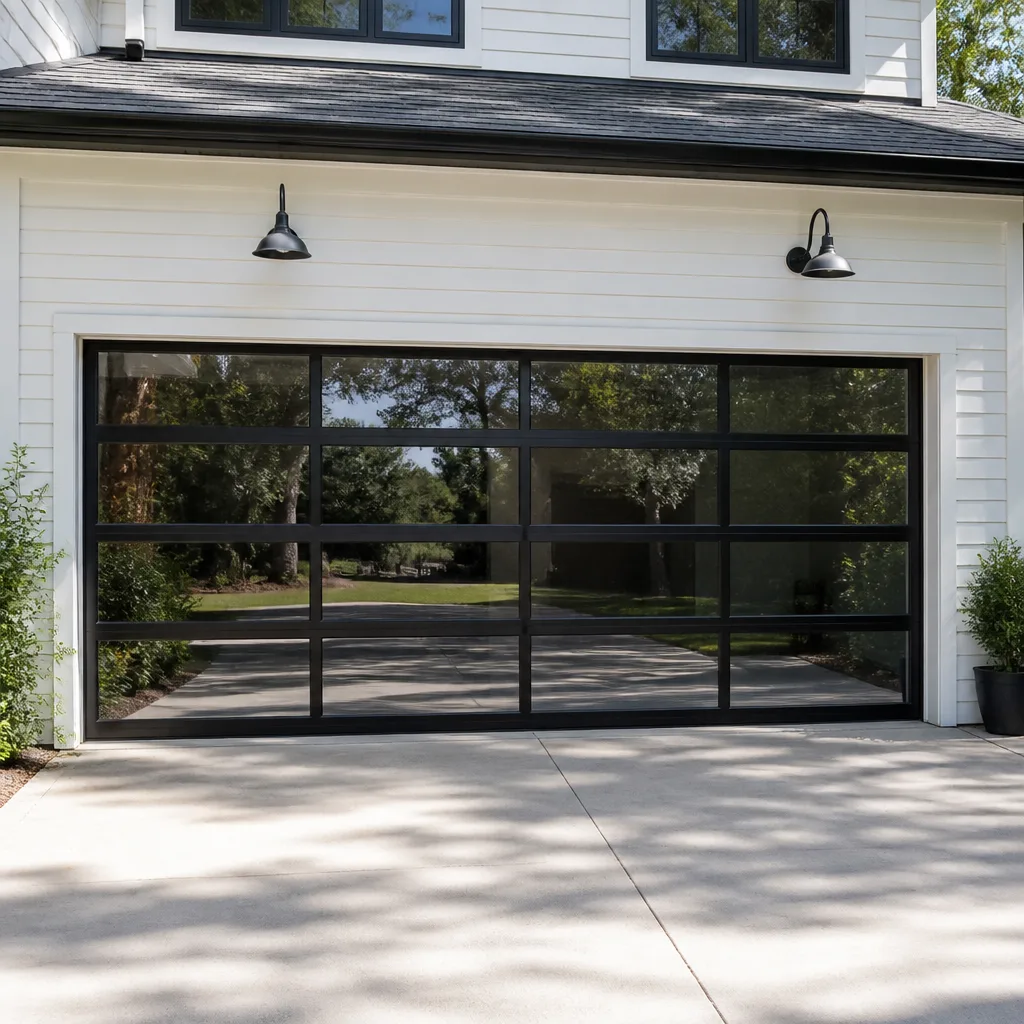 Full-view glass
 LiftMaster openers
 Chamberlain openers
Full 25-point door and opener safety check with every visit - springs, cables, rollers, tracks, and your LiftMaster or Chamberlain opener included
You get a price before we start. It does not change when the truck arrives.
Get your free estimateSeasonal Garage Door Care for Fountain Valley: Year-Round Homeowner’s Guide
Fountain Valley doesn’t get snow, so most seasonal maintenance guides don’t apply. What it does get is Santa Ana winds in October that force debris into door tracks at 60 mph, June marine layer that condenses inside torsion spring coils, and August heat that degrades rubber seals faster than any winter freeze would. Here’s the calendar that actually fits. This guide walks you through the five real maintenance events that affect garage doors in Fountain Valley, when to schedule them, and how to catch small problems before they become $400 spring replacements. For a deeper look at all aspects of door care, see our The Complete Garage Door Repair Guide for Fountain Valley Homeowners. We’ve built this around what we actually see on service calls across the city, from tract-home neighborhoods near Mile Square Park to the newer developments east of the 405.
Quick Answer
Seasonal garage door care in Fountain Valley means syncing maintenance to five local climate events rather than four calendar seasons: pre-Santa Ana track clearing in September, post-wind hardware checks in November, marine-layer corrosion inspection in June, summer heat seal replacement in August, and post-rain drainage checks after winter storms. Most homeowners can handle track clearing and visual inspections themselves, but spring tension, cable wear, and opener diagnostics need a trained technician – topics we cover in detail in The Complete Garage Door Repair Guide for Fountain Valley Homeowners. Budget roughly 90 minutes of DIY attention per year and one professional tune-up every 12 to 18 months.
Styles & brands we work with
- Raised-panel steel
- Carriage house
- Modern flush
- Full-view glass
- LiftMaster openers
- Chamberlain openers
Table of Contents
- Santa Ana Prep: September to November Wind and Debris Defense
- June Gloom: Marine Layer Corrosion and Your Springs
- Summer Heat: Seal Degradation in Fountain Valley’s Peak Temperatures
- Post-Rain Inspection: Drainage and Track Health on Flat Terrain
- Opener Safety Sensor Alignment: Your Annual Calibration Cue
- The Right Lubrication Schedule for Coastal-Influenced Air
- What a Professional Tune-Up Covers: Your 12-Month Service Baseline
- Key Takeaways for Fountain Valley Homeowners
Santa Ana Prep: September to November Wind and Debris Defense
Santa Ana winds hit Fountain Valley from the northeast, channeling through the Santa Ana Canyon and picking up speed before they reach our flat residential streets. These gusts regularly exceed 40 mph, and in stronger events, we’ve measured 60 mph bursts along the Talbert Channel corridor. For garage doors, that’s not just an annoyance. It’s a mechanical stress event.
The wind pushes against the door face, testing every hinge, roller, and bracket. But the bigger problem is debris. Palm fronds, eucalyptus bark, and construction dust from Fountain Valley’s ongoing redevelopment get driven sideways into tracks, wedged between panels, and packed into the bottom seal channel. We see more track-jam calls in October than any other month of the year.
Here’s the prep sequence we recommend for late September, before the first major Santa Ana event:
- Clear the track channels. Use a shop vacuum with a crevice tool to remove debris from both vertical tracks. Run the door up and down manually once to check for catch points.
- Inspect the bottom seal. A torn or compressed seal lets wind-driven dust and leaves blow under the door. In Fountain Valley, this is your primary defense against grit getting into roller bearings.
- Check wind-load hardware. All garage doors sold in Southern California are rated for specific wind loads, but the reinforcement struts and brackets need to stay tight. Grab each hinge with a gloved hand and try to wiggle it. Any movement means a loose fastener.
- Test the emergency release. Santa Ana events can cause brief power flickers. You want to know your manual release works before you need it.
- Walk around the outside. Look for cracked panel seams or loose weatherstripping that wind can peel back. Small gaps become tears during gust cycles.
If you find a door that’s binding mid-travel or a track that’s visibly out of alignment after a wind event, don’t force the door. Call a Garage Door Repair in Fountain Valley service that can realign the track and inspect the panel hardware in one visit. Forcing a bound door through a track is how you bend rollers and snap lift cables.
June Gloom: Marine Layer Corrosion and Your Springs
Fountain Valley sits about four miles inland from Huntington Beach, close enough that the June marine layer rolls over the city most mornings and burns off by early afternoon. That daily cycle of condensation and evaporation is the single most corrosive force your garage door hardware faces all year.
Here’s what happens: overnight, cool marine air settles in. Metal surfaces, including your torsion spring coils, hinge plates, and bearing brackets, drop to the dew point. Water condenses directly on the steel. By 10 a.m., the sun burns through and the moisture evaporates, leaving behind a microscopic film of salt and mineral residue from the marine air. Repeat that 25 to 30 mornings in a row, and you have ideal conditions for surface rust.
Torsion springs are the most vulnerable component. They’re under constant tension, their coils expand and contract on every cycle, and the protective coating wears thin at the contact points first. Once rust starts at those friction points, the spring’s cycle life drops. A spring rated for 10,000 cycles might fail at 7,000 if corrosion sets in early.
Late June or early July is the right time for this inspection. The marine layer season is winding down, and you can see what the moisture left behind.
Here’s what to look for:
- Orange-brown dust on spring coils. That’s early surface rust. Surface rust alone doesn’t mean failure is imminent, but it signals that the protective coating is compromised.
- Flaking or pitting on the spring surface. This is more serious. Pitted steel under tension fails faster. If you see this, have a professional assess the spring’s remaining service life.
- Rust staining on the track below the spring line. Water runs downhill. If the track shows rust streaks, water has been condensing on the spring and dripping down. Check the spring itself.
- Corrosion on bottom brackets and cable anchors. These are the points where lift cables attach. A corroded anchor is a failure waiting to happen.
We work on torsion and extension spring systems from Amarr, Clopay, Wayne Dalton, and every major door manufacturer, and the corrosion pattern is consistent across all of them in Fountain Valley’s marine influence zone. The fix is the same: clean the surface rust with a wire brush when caught early, and replace springs that show pitting. Never try to clean or adjust a torsion spring yourself. These are under hundreds of pounds of tension and serious injury is a real risk. Call a professional with the right winding bars and training.
Summer Heat: Seal Degradation in Fountain Valley’s Peak Temperatures
August in Fountain Valley regularly pushes 90 degrees, and the western-facing garage doors absorb direct afternoon sun for four to five hours straight. The bottom seal on your garage door is typically made from EPDM rubber or PVC, and that material has a specific failure profile in sustained heat: it loses plasticity, develops micro-cracks at flex points, and eventually tears at the corner joints where the seal bends to follow the door’s edge.
Here’s the counterintuitive part. In colder climates, bottom seals fail from cold cracking. In Fountain Valley, they fail from heat cycling. The rubber heats to 140-plus degrees on August afternoons, then cools 40 degrees overnight. That daily expansion-contraction cycle, repeated for two to three months, fatigues the material at the same rate a single winter freeze would.
What most homeowners don’t realize is that a degraded bottom seal creates a compounding problem. The gap lets hot air in, which makes your garage warmer, which makes your water heater and any refrigerated items work harder, which raises your energy bill. Separate from that, the gap is an entry point for crickets, earwigs, and the occasional field mouse from the Talbert Channel greenbelt, all of which are active in Fountain Valley’s late summer.
Plan to inspect the bottom seal in early August, before the worst heat of the season. Replace it if you see any of these:
- Cracking or splitting at the corners. This is where seals almost always fail first. The T-channel installation puts maximum flex stress at the 90-degree bends.
- Visible gap of more than 1/8 inch between the seal and the driveway slab. Driveway settlement is common on Fountain Valley’s flat terrain, and it creates a partial gap even when the seal is intact.
- The seal feels stiff and creaks when bent. That’s lost plasticity. The material has cured out and will tear soon.
- Water staining or debris line inside the garage. If you see grit and dust accumulating near the door’s interior bottom edge, the seal is already compromised.
Replacement seals are sized by door width and thickness. Most standard residential doors in Fountain Valley take a 3.5-inch or 4-inch replacement seal, available through the door manufacturer or through a local repair company. If your door is a Clopay or Amarr model, the manufacturer’s branded seal will fit best, but high-quality universal seals work well on Wayne Dalton and Craftsman doors too. For help selecting the right product, read Choosing the Right Garage Door Brand: A Buyer’s Guide for Fountain Valley. When in doubt, let someone who knows your door brand handle it.
Post-Rain Inspection: Drainage and Track Health on Flat Terrain
Fountain Valley is flat. Nearly the entire city sits between 20 and 40 feet above sea level, with drainage that relies on a network of storm channels and flood control basins rather than natural slope. During winter rain events, certain streets, particularly older tract-home areas south of Slater Avenue and neighborhoods near the Santa Ana River, see standing water at the curb line for 24 to 48 hours after a storm.
For garage doors, the problem isn’t usually flooding. It’s splash-back. Cars driving through standing water push it sideways into your driveway, where it runs under the door if the bottom seal isn’t tight. That water carries fine silt and oil residue from the street, and once inside the garage, it accumulates at the base of the vertical tracks and roller housings.
The result is slow, grinding wear on the bottom rollers and, if left unaddressed, rust on the lower track brackets. We see it most often on homes where the garage floor slab sits slightly below the driveway approach, a surprisingly common grading issue in Fountain Valley’s older developments.
Schedule this inspection 2 to 3 days after the season’s first significant rain event, typically in November or December, and repeat after any storm that drops more than an inch:
- Check for water staining inside along the door’s bottom edge. A dark waterline or silt streak means water is getting past the seal.
- Lift the door halfway and look at the bottom rollers. Gritty residue on the wheel surface is a sign that splashed water is carrying contaminants into the track.
- Run a finger along the inside of the lower track. If it comes up gritty or oily, the track needs cleaning and the rollers need lubrication.
- Look at the concrete approach just outside the door. If water ponds there after rain, consider a threshold seal or re-grading the approach slope.
- Test the door’s self-seating. Close it fully and check that the seal sits flat against the floor with no visible light gap.
For homes near the drainage channels and flood control basins, add a monthly spot-check during the winter rainy season. After the 2023 winter storm series, we saw a measurable increase in track corrosion calls from these neighborhoods, almost all of them tied to repeated splash-back contamination.
Opener Safety Sensor Alignment: Your Annual Calibration Cue
Every garage door opener manufactured since 1993 has photoelectric safety sensors mounted on either side of the door opening, about six inches off the floor. They project an invisible beam across the opening. If anything blocks that beam while the door is closing, the opener reverses. It’s the single most important safety feature on your garage door system, and it’s also the most commonly misdiagnosed failure point in residential setups.
In Fountain Valley, we recommend tying your annual sensor check to a local event you won’t forget: the first week of November, when daylight saving time ends and you’re already walking around the house resetting clocks. The time change is your maintenance cue.
The symptoms of misaligned sensors are specific. The door starts to close, then reverses for no apparent reason. Or the opener light blinks and the door won’t move at all. Or you have to hold the wall button down continuously to close the door. All three point to a sensor issue before they point to anything else.
Here’s the alignment check process:
- Check the LED indicator lights on both sensor units. Most LiftMaster, Genie, and Chamberlain openers have a green light on one side and a solid green or amber light on the other. A blinking light means misalignment or obstruction.
- Clear obstructions. Brooms, bikes, recycling bins, and holiday storage boxes are the usual culprits. Anything within six inches of the beam path can trigger a reversal.
- Gently wipe each sensor lens with a dry microfiber cloth. Dust and spider webs on the lens will scatter the beam. This is especially worth doing if you store gardening supplies or paint cans near the door.
- Loosen the wing nut on the mounting bracket. Adjust the sensor angle slightly, a few degrees up or down, until the indicator lights stabilize to the solid “aligned” state.
- Test with the obstruction test. Place a 2×4 or roll of paper towels in the beam path while the door is open. Press close. If the door reverses, the sensors are working correctly.
If you’ve done all five steps and the door still reverses randomly, the issue is probably in the opener logic board or the wiring, not the sensors themselves. That’s a Garage Door Opener Repair in Fountain Valley call. We carry diagnostic equipment for all major brands, and we see these intermittent reversal problems most often on openers more than 10 years old, especially Craftsman and older Chamberlain models.
The Right Lubrication Schedule for Coastal-Influenced Air
Garage door lubrication is the most overcomplicated and misapplied piece of maintenance advice in the industry. Homeowners are told to lubricate their doors without being told what to use, where to put it, or how often. The result is either neglecting it entirely or spraying the wrong product into the wrong places.
Here’s what actually works in Fountain Valley’s climate:
What to use: A lithium-based spray grease or a purpose-made garage door lubricant. Not WD-40. WD-40 is a solvent and penetrant, not a lubricant. It displaces moisture, which is useful in marine-layer conditions, but it does not leave a lasting film on moving parts. After a few weeks, the metal is drier than before. For the marine air that blankets Fountain Valley from late May through July, you want a lubricant that leaves a protective film. Silicone spray works for rollers. White lithium grease works for hinges and springs.
Where to apply it:
- Hinge pins and pivot points – one short spray on each hinge, four to six hinges per door depending on design.
- Roller ball bearings – only if your rollers have exposed bearings. Nylon rollers with sealed bearings need no lubrication.
- Torsion spring coils – a light coat along the length of the spring while the door is open. This also gives you a chance to inspect for corrosion at the same time.
- Lock mechanism and latch – if your door has a manual lock bar, keep it lubricated so it engages smoothly.
- Track channels – nothing. Do not grease the tracks. Greased tracks collect grit and create a paste that wears rollers faster.
- Torsion spring tension testing. Torsion springs are calibrated to specific inch-pounds of torque for your door’s weight and size. Over time, springs lose tension. A professional uses a winding bar and torque measurements to verify the spring is within spec and adjusts or replaces as needed.
- Cable wear inspection. The lift cables on either side of the door work as a balanced pair. When one cable starts fraying, the other takes the entire load. Cables that fail under tension are dangerous and cause the door to drop unevenly. We check for broken strands, corrosion at the anchor points, and proper seating on the drum.
- Roller and track wear measurement. Rollers have a service life. Worn rollers develop flat spots that cause grinding and vibration, which transfers stress to the hinges and tracks. A professional measures roller diameter and track alignment in the same visit.
- Opener force setting verification. Modern openers have adjustable force settings that should be checked against the door’s actual weight and balance. A door that’s heavier than the opener’s force setting means the opener is overworking on every cycle. That’s how opener motors burn out early.
- Safety reversal test with calibrated obstruction. The sensor check from the homeowner-level guide is good, but a professional tune-up should also test the mechanical reversal function using an actual measured obstruction.
- Balance test. When the door is disconnected from the opener, it should hold position at the halfway point without drifting up or down. A door that drops or rises is out of balance, and that unevenness accelerates wear on every component in the system.
How often: Twice a year is right for Fountain Valley’s conditions. Once in early March, after the winter rain season, and once in early October, before the Santa Ana winds. If your garage faces west and bakes in afternoon heat during August, add a third application in late July. The heat accelerates lubricant breakdown, especially on exposed hinge points.
Lubrication takes about 10 minutes and costs a few dollars per application. It extends roller and hinge life measurably. In our experience, doors that get lubricated twice a year have roller failures at half the rate of doors that never get lubed. It’s the highest-value maintenance minute you can spend.
What a Professional Tune-Up Covers: Your 12-Month Service Baseline
Every 12 to 18 months, your garage door should get a professional inspection and tune-up. This is not an upsell gimmick. It’s the difference between catching a failing spring during a scheduled visit and having that spring snap at 7:45 a.m. on a Tuesday with your car trapped inside.
A proper tune-up covers the systems that a visual homeowner inspection can’t reach:
We perform this full inspection on every brand we service, and because we work on LiftMaster, Chamberlain, Genie, Clopay, Amarr, Wayne Dalton, Craftsman, and Raynor equipment regularly, we arrive knowing your system’s known failure points rather than discovering them on-site. That familiarity means a faster visit and a more accurate recommendation on whether to repair or replace.
When to Consider Replacement Over Repair
Sometimes the seasonal inspection reveals a door that’s reached the end of its serviceable life. Here’s how to make the repair-versus-replace decision honestly, and you can find more guides & resources on our blog to help with every stage of door ownership.
The threshold math is straightforward. If the door is more than 15 years old and needs repairs totaling more than half the cost of a new door, replacement is the better long-term choice. A new door comes with fresh springs, fresh cables, new rollers, and a new bottom seal, all sized to the new panel weight. Repairing an old door piece by piece reaches a point of diminishing returns quickly.
Signs that point toward Garage Door Installation in Fountain Valley rather than another repair cycle:
- Panel rust-through or structural rot. Steel panels with rust that has gone past surface discoloration cannot be repaired effectively. The door’s structural integrity is compromised.
- Recurring hinge failures. When the same hinge breaks twice in 18 months, the panel it mounts to is weakening, and the problem will keep coming back.
- Door weight above opener rating. Solid wood doors from the 1990s weigh significantly more than modern insulated steel. If your opener is fighting the door’s weight on every cycle, a lighter new door extends opener life dramatically.
- Energy inefficiency. Uninsulated or poorly insulated doors make your garage noticeably hotter in August. Modern insulated doors from Clopay and Amarr cut that heat gain significantly, which matters if you use the garage as a workspace or if there’s living space above it.
Replacement is a bigger decision than repair, and it should be quoted carefully. You want a written price that includes the door, the installation, the haul-away, and the opener integration if you’re keeping the existing opener. Get that quote before committing. No one should be surprised by the final invoice.
See the difference
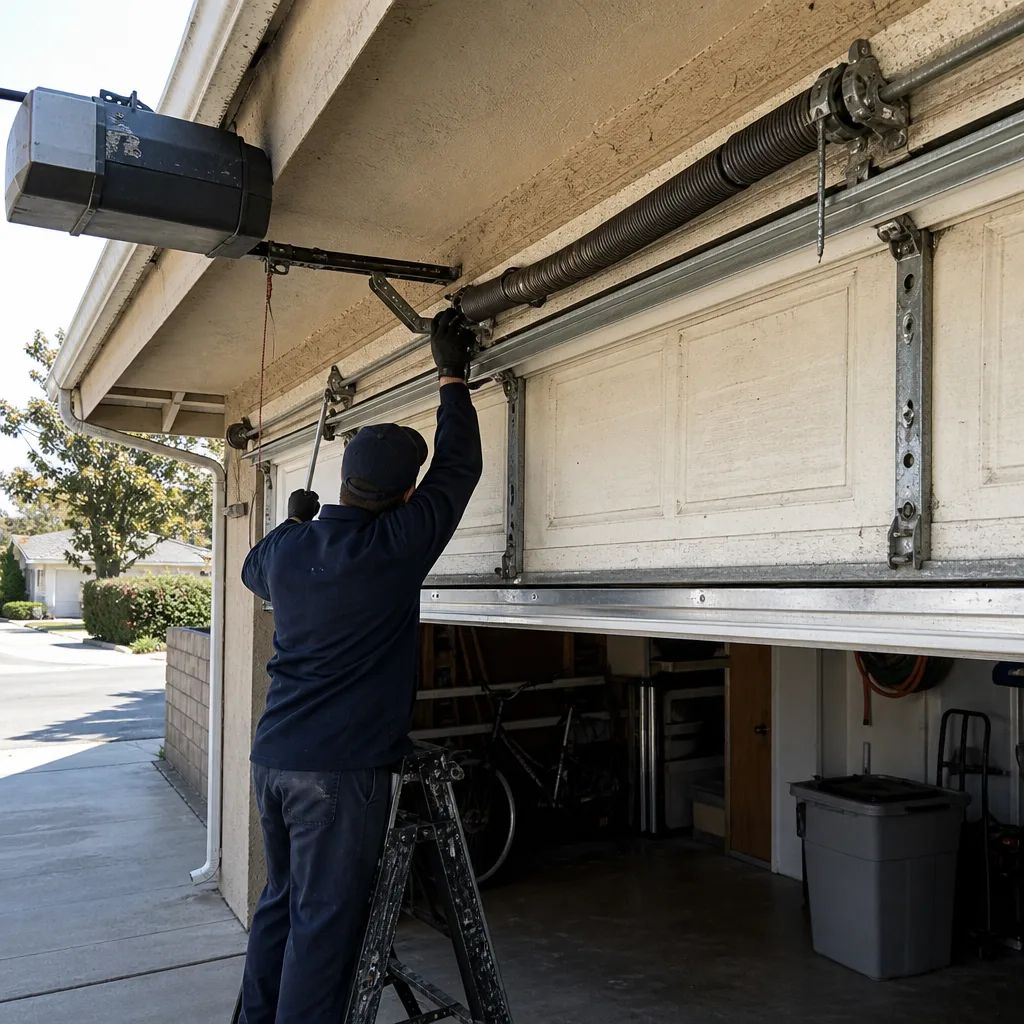 Before
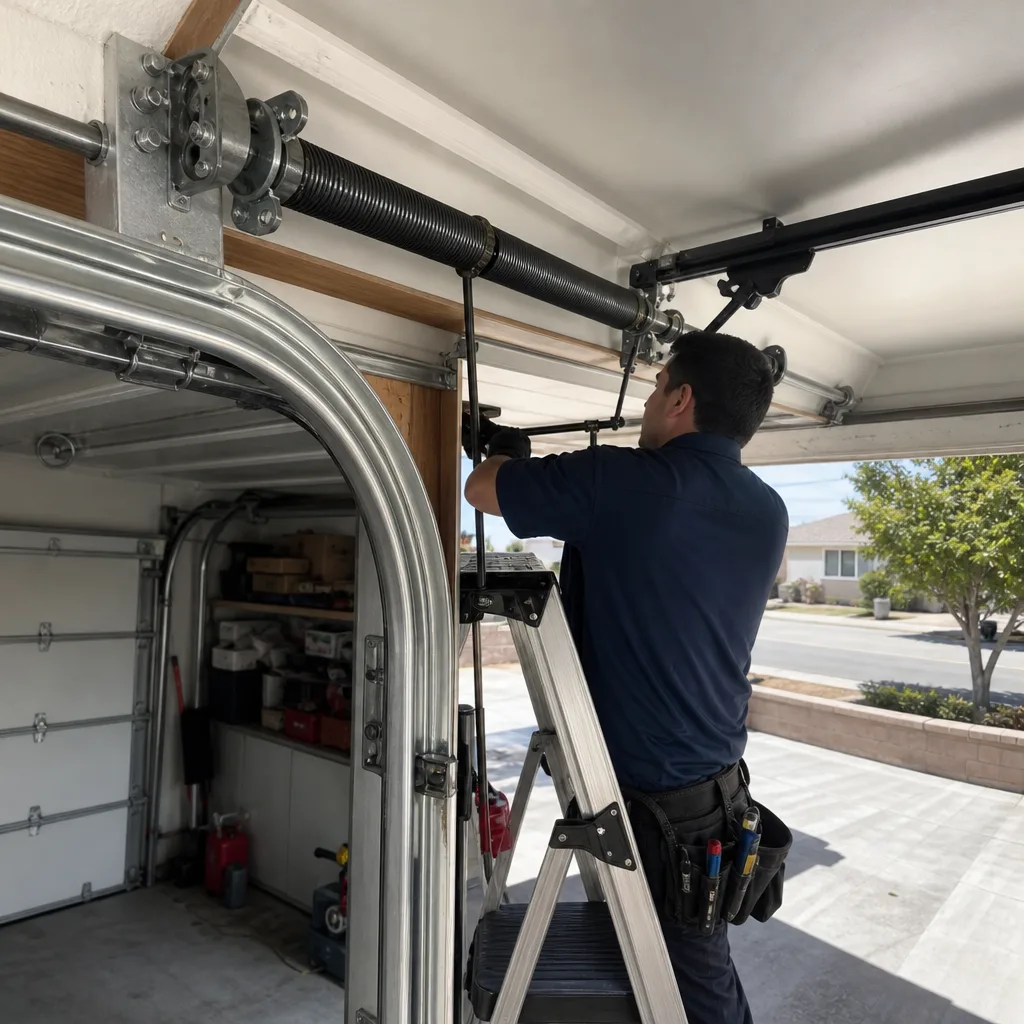 After
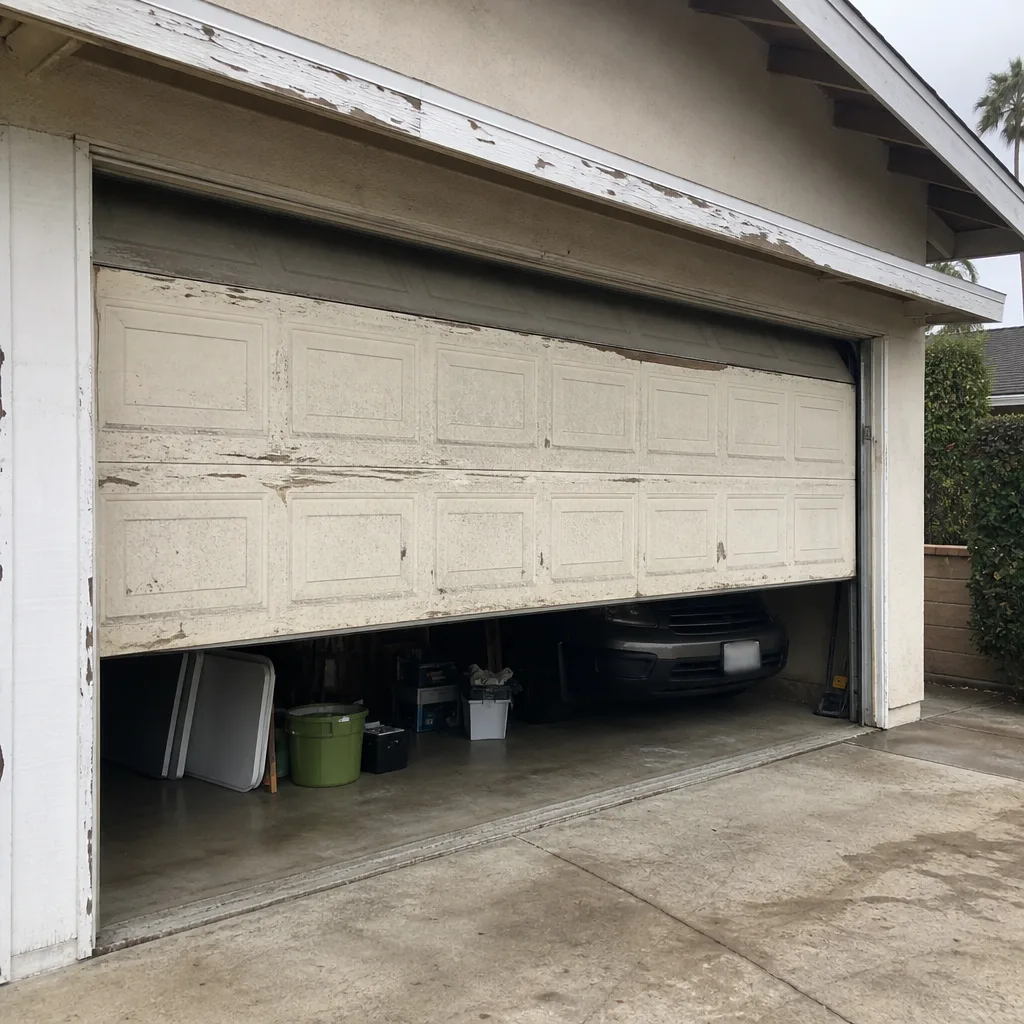 Before
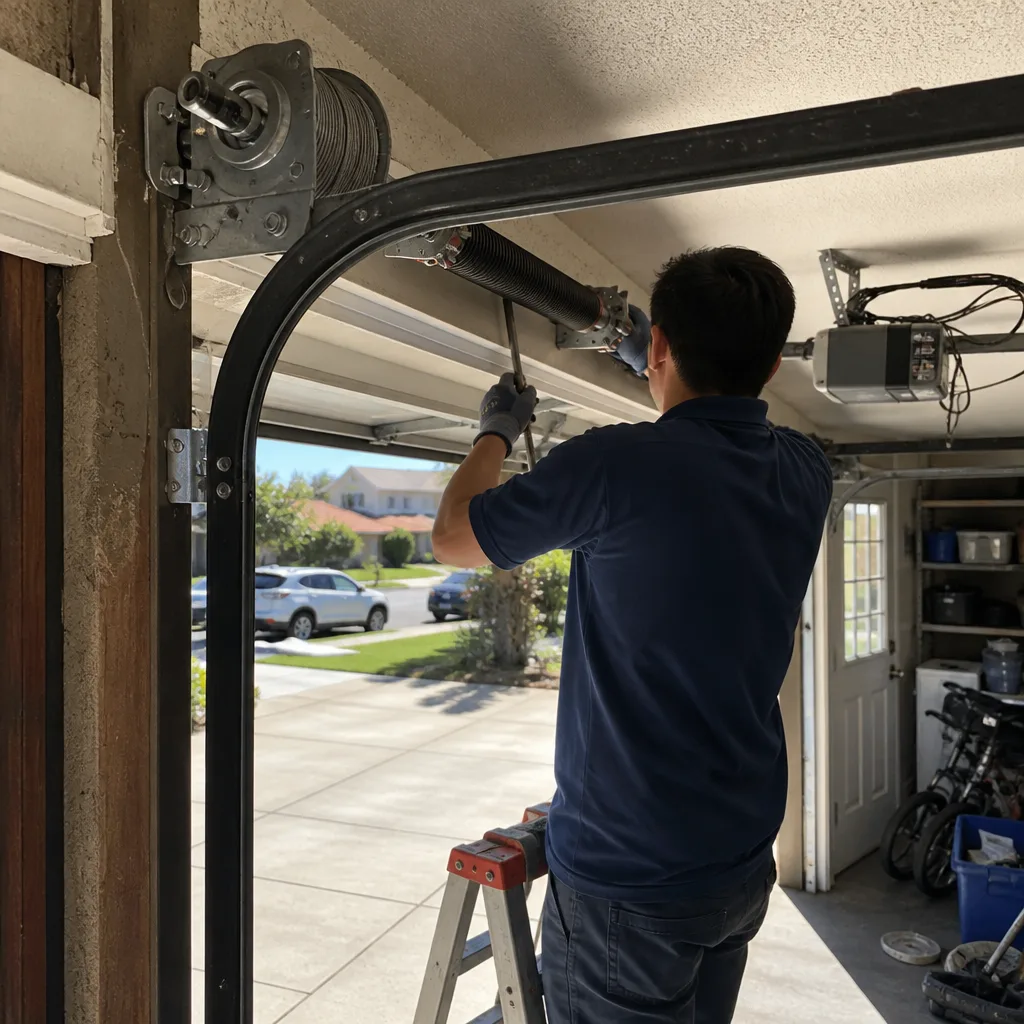 After
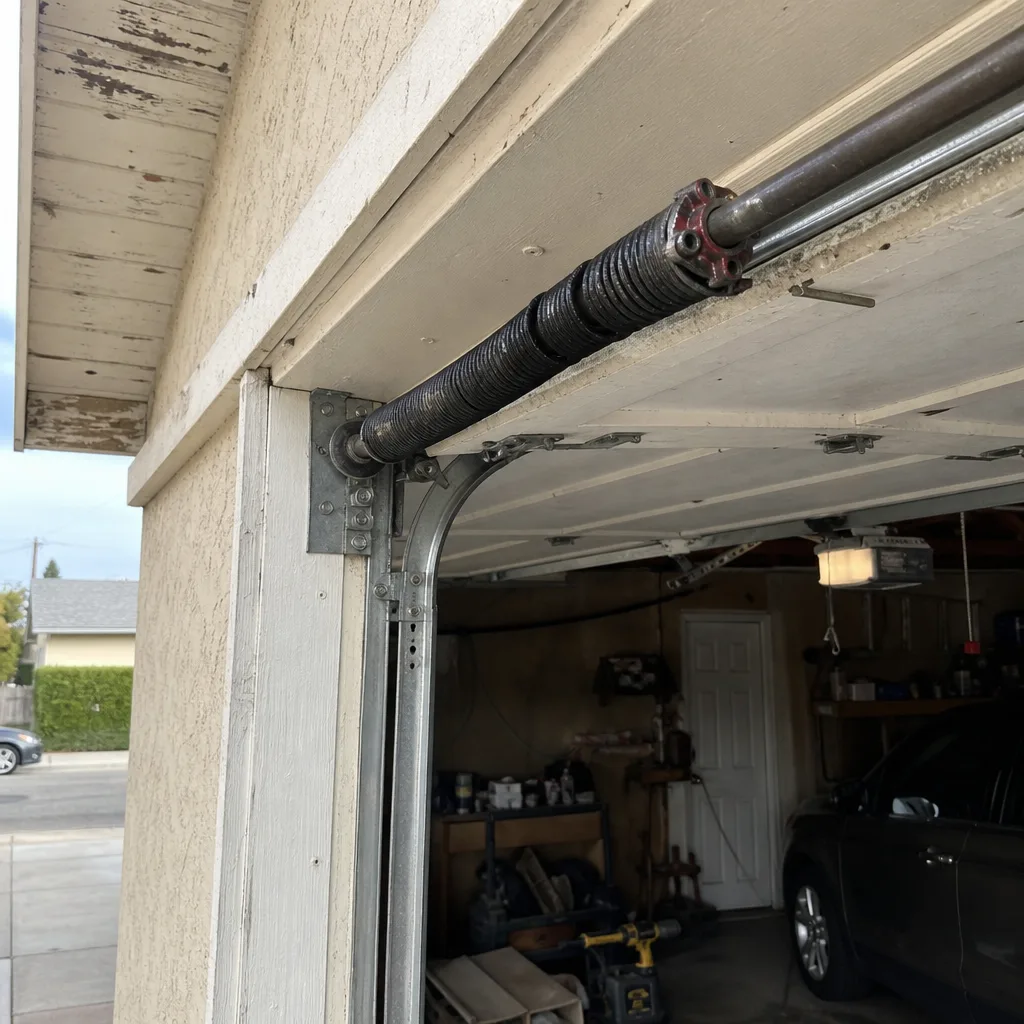 Before
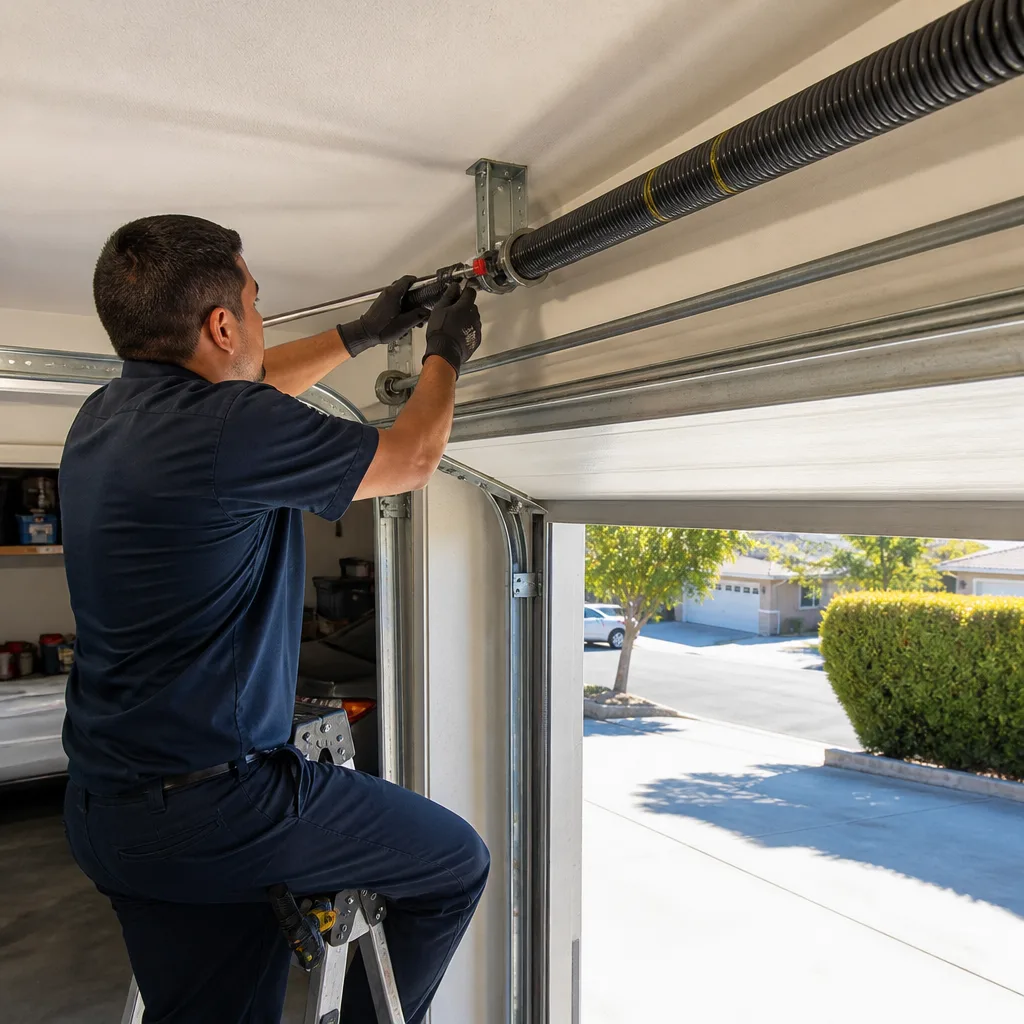 After
Common Mistakes to Avoid
- Using WD-40 as a garage door lubricant. It’s the most common mistake we see in Fountain Valley garages. WD-40 removes moisture and grease, which is the opposite of what a hinge or spring in marine-adjacent air needs. Use lithium grease or silicone spray instead.
- Ignoring a reversing door. When a door starts randomly reversing on the way down, many homeowners adjust the force setting or disconnect the sensors entirely. Disabling or bypassing safety sensors is not just a code violation. It’s a genuine safety hazard for kids and pets. Fix the sensor, don’t defeat it.
- Waiting until the door is stuck to call. Most garage door failures announce themselves weeks in advance with grinding, banging, slow travel, or a visible spring gap. Prompt attention usually means a lower-cost fix. Waiting turns a roller replacement into a track repair.
- Greasing the track channels. Tracks should stay dry and clean. Grease in the track attracts the exact grit that Santa Ana winds drive into the channel in October, and the resulting abrasive paste eats roller bearings quickly.
- Replacing springs as a DIY project. Torsion springs are under enough tension to cause serious, life-changing injury when mishandled. The winding bars and technique required are not something a YouTube video can safely teach. This is a hard line: call a professional.
- Skipping the annual sensor check. The safety sensor system is what stops your door from closing on a bicycle, a car bumper, or a child. The time-change reminder in early November costs 10 minutes. Do it every year.
- Replacing the seal without measuring the door thickness. Bottom seals come in specific thickness profiles. Installing the wrong one leaves a gap or binds the door at the bottom of travel. Measure first or let a professional handle the replacement.
When to Call a Professional
Some garage door work is safe and straightforward for a homeowner. Track cleaning, visual inspections, sensor alignment, and lubrication are all within reach. But spring replacement, cable work, track realignment, and opener logic board issues require training and specialized tools, and getting them wrong creates real safety risk. If you’re hearing grinding during door travel, if the door is visibly crooked when closing, if a spring shows pitting or a visible gap, or if the opener is misbehaving beyond a simple sensor fix, stop and call someone who does this work every day. Steward Garage Door Repair offers free estimates in Fountain Valley. Call (877) 759-1759 and we’ll come out, diagnose the issue, and quote the repair before any work starts.
Frequently Asked Questions
Twice a year is the right cadence for Fountain Valley’s climate: once in early March after the winter rain season and once in early October before Santa Ana winds arrive. If your garage door faces west and absorbs direct August heat, add a third lubrication in late July. Use lithium-based spray grease on hinge pins and springs, silicone spray on rollers with exposed bearings, and nothing at all inside the track channels. Call (877) 759-1759 if you’d like a professional lubrication and inspection as part of a full tune-up.
The most common cause is a misaligned or dirty safety sensor. In Fountain Valley’s marine-layer season, morning condensation can film the sensor lenses, scattering the infrared beam. Clean both lenses with a dry cloth and check the alignment indicator lights. If the problem persists after sensor alignment, the issue is likely in the opener’s logic board or force settings, which requires professional diagnosis. Call (877) 759-1759 and we’ll test the full sensor and opener system.
Yes, and it’s more common than most Fountain Valley homeowners realize. Sustained 40 to 60 mph gusts push against the door face and stress every hinge, roller, and bracket. The more specific problem is debris: palm fronds and tree bark driven into track channels, where they cause jams and bend rollers. After any major wind event, clear the tracks and check that the door still opens and closes smoothly. If it binds or grinds, call (877) 759-1759 before forcing it and causing more damage.
Standard torsion springs are rated for about 10,000 cycles, which translates to 7 to 10 years for a door that opens twice a day. In Fountain Valley’s marine-layer zone, corrosion from morning condensation can cut that lifespan by 20 to 30 percent, especially if the spring’s protective coating was compromised at the contact points. If you see rust pitting or a visible gap in the coil, schedule a replacement soon rather than waiting for a failure. We quote spring replacement before any work starts.
Yes, the basic sensor alignment and cleaning process is something most homeowners can handle with 15 minutes and a screwdriver. The wing-nut bracket design on most LiftMaster, Chamberlain, and Genie openers makes angle adjustment straightforward. What you should not do is disconnect or bypass the sensors to make a reversing problem go away. Those sensors are a critical safety feature, and disabling them is a code violation and a genuine danger to people and pets.
Professional tune-ups in Fountain Valley typically range from $85 to $150 depending on the scope of inspection and whether minor adjustments are needed during the visit. Component replacements like springs, rollers, or seals are quoted separately, and any reputable company will give you the price before performing the work. For an exact quote for your door and your neighborhood, call (877) 759-1759. Estimates are free, and we’ll tell you honestly whether a tune-up is what your door actually needs.
The Bottom Line
Fountain Valley’s garage doors don’t fail from dramatic weather. They fail from the slow accumulation of marine-layer corrosion, Santa Ana debris, and summer heat fatigue. The good news is that all three are manageable with a simple calendar: clear tracks in late September, inspect sensors when the clocks fall back, check springs after June Gloom, and replace the bottom seal in early August. About 90 minutes of attention per year, plus a professional tune-up every 12 to 18 months, keeps your door running reliably. The Steward mindset is exactly this: ongoing care, not emergency reaction. Your garage door is your home’s largest moving part. Treat it that way, and it’ll treat you well for a decade or more. For help with any of the steps in this guide, Steward Garage Door Repair home services all of Fountain Valley. Call (877) 759-1759 for a free estimate and we’ll take care of the rest.
Written by the team at Steward Garage Door Repair, serving Fountain Valley since 2014.